
You know that moment in Year 10 when your teacher confiscated your phone mid-lunch and you genuinely felt like your human rights had been violated? Congratulations. The government has decided to make that feeling completely legal. Permanent. Nationwide.
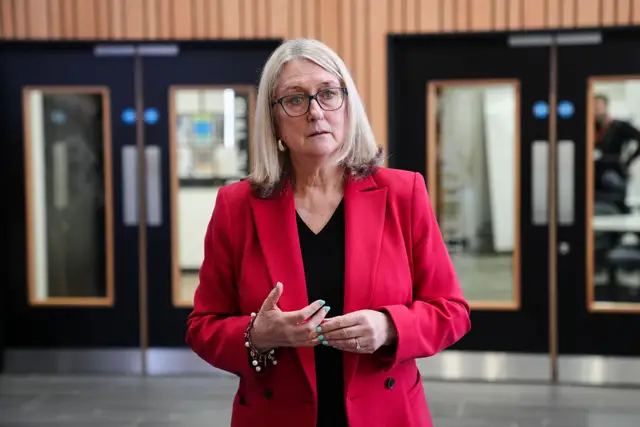
On Monday 21 April 2026, Education Minister Baroness Jacqui Smith stood up in the House of Lords and announced that the government would table an amendment to the Children’s Wellbeing and Schools Bill. Specifically, it will create a clear legal requirement for every school in England to ban phones during the school day. Furthermore, it means headteachers who previously ignored the guidance can no longer look the other way.
So What Is Actually Changing?
Here is the thing. Most schools already banned phones. Therefore, you might be wondering what exactly is new here.
Previously, the government issued non-statutory guidance telling schools to go phone-free. However, headteachers could essentially read that guidance, shrug, and do whatever they liked. Consequently, enforcement was patchy and inconsistent across the country.
Now, the Department for Education is putting that guidance on a statutory footing. Specifically, that means schools must take it into account. Schools that ignore it will be legally accountable. Furthermore, Ofsted has already started assessing phone policies as part of every school inspection. So the teeth are officially in.
The Science Bit (And It Is Messier Than You Think)
Now, here is where it gets interesting. The government is selling this as a mental health and education win. However, the actual evidence is more complicated than the press release suggests.
A landmark study published in the Lancet Regional Health Europe in February 2025, involving students from 30 schools across England, found no evidence that restrictive phone policies were associated with improved mental wellbeing, anxiety, depression or educational attainment. Furthermore, researchers from the University of Birmingham found that students in schools with bans simply used their phones more after school to compensate. Ultimately, total screen time on weekdays did not change.
However, that is not the full picture either. The House of Commons Education Committee concluded that a ban can have a positive impact on mental health and educational outcomes. Additionally, King’s College London research has identified links between heavy smartphone use and depression, anxiety and insomnia in teenagers. Consequently, the debate is genuinely unsettled.
The honest answer? Banning phones at school probably helps. However, it is not a silver bullet.
Why the Government Is Doing This Right Now
Timing matters. The Children’s Wellbeing and Schools Bill has been bouncing between the Commons and Lords for months, with peers repeatedly demanding stronger action on children’s social media use. Specifically, peers voted by 276 to 169 to push for a ban on smartphones in schools, effectively forcing the government’s hand.
Furthermore, Prime Minister Keir Starmer recently met executives from Meta, Google, TikTok and X, declaring that “things must change.” Therefore, this phone ban is part of a broader push to be seen as tough on Big Tech and protective of children. Whether it is genuine policy conviction or political optics is, frankly, a question worth asking.
So Here’s How This Affects You
Whether you are a student, parent or teacher, here is your practical breakdown.
Step one: Check whether your school already has a phone policy in place. Most do. Therefore, day-to-day life may not change dramatically right away.
Step two: If you are a parent concerned about emergency contact, look into whether your school accepts basic non-smart phones or uses a landline system for urgent calls.
Step three: If you are a student, genuinely consider this a nudge. Research consistently links heavy phone use to worse sleep, lower grades and worse mood. Specifically, the Lancet study confirmed students with longer smartphone use had poorer wellbeing across every measure tracked.
Step four: Watch the Children’s Wellbeing and Schools Bill as it continues through Parliament. Additionally, broader restrictions on children’s social media access are still being debated inside the same legislation.
Ultimately, England is catching up with France, Italy and Portugal, which have already implemented bans. Consequently, this is the direction the world is moving. However, the government should be honest: legislation alone will not fix the deeper problem. Furthermore, until Big Tech redesigns its platforms to stop hijacking children’s attention, confiscating phones at the school gate is treating the symptom rather than the cause.
If you enjoyed this article and want to read more, there’s a whole archive of articles on topics like this and so many others. We do a newsletter discussing articles written this week you may have missed. Subscribe here to get access to the mailing list.
