
Right now, one of the biggest debates surrounding Artificial Intelligence (AI) is not even about AI itself.
It is about AI detection tools. Why? Well…schools, employers, publishers, and freelancers all use them. Students have been arguing about them for the past few weeks, and the debate is getting louder.
Some people believe AI detection tools are necessary because AI-generated content is becoming increasingly difficult to identify manually. Others believe the entire concept is flawed from the start. You can see both sides of the argument.
After all, developers train AI models with massive amounts of human writing. So if an AI learns from humans, how can another AI confidently decide what is “human” and what is “AI”?
That irony is one of the main factors of this debate. It raises an important question: Can We Actually Trust AI detection tools? The answer is more complicated than many people think.
ALSO READ: Top 10 AI Tools for Founders and CEOs in 2026
How AI Detection Tools Actually Work
Most AI detection tools do not “know” whether a human or AI wrote something. Instead, they make predictions. These tools analyse writing patterns such as:
- Sentence structure
- Predictability
- Word repetition
- Writing rhythm
- Complexity levels
Then they estimate the likelihood that a text was AI-generated. This part is crucial, because the percentages these tools display are probabilities, not proof.
For example, if a detector says a document is “92% AI-generated,” that does not mean the tool somehow discovered hidden AI fingerprints inside the text. It does not mean that 92% of the text was AI-generated, it just estimates a 92% likelihood of the writeup being AI-generated.
It simply means the writing statistically resembles patterns often associated with AI models. According to The Alan Turing Institute, AI systems are fundamentally predictive technologies that rely heavily on probability and pattern recognition. That means AI detection itself is based on estimation, not certainty.
The major criticism against AI detectors is false positives. This happens when a completely human-written text is incorrectly flagged with a high likelihood of being AI-generated. And no, this is not rare. It’s not a fringe case at all.
Research from Stanford University’s Human-Centered AI Institute found that many AI detection systems struggle with reliability and disproportionately misclassify certain writing styles.
One particularly worrying issue is that simple writing, formal writing, non-native English writing and academic writing can sometimes appear “AI-like” to detectors, because of the formal nature of the text.
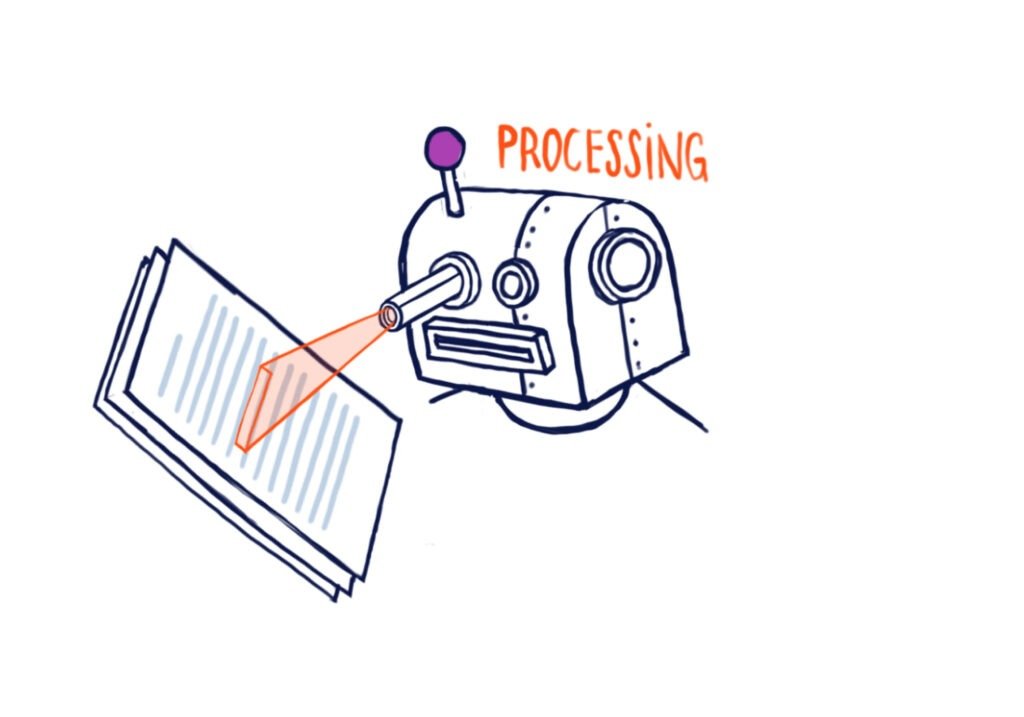
This, of course, creates serious problems.
Imagine a student falsely accused of cheating, or a journalist accused of misconduct, or even a freelancer losing clients, all based purely on an unreliable prediction system.
Even OpenAI itself previously discontinued its own AI classifier tool because of low accuracy rates. That decision alone says a lot about the current state of AI detection technology.
If the companies building advanced AI models admit detection is unreliable, people should probably pay attention, but hey, what does OpenAI know anyway?
Why AI Detectors Often Disagree With Each Other
When you start using AI detection tools, the first thing you notice is that different AI detectors often produce completely different results for the same text. One tool may say 90% AI likelihood, while another might say 63% for the exact same article.
That inconsistency is one reason trust in these systems remains low.
According to researchers at University College London (UCL), AI-generated text detection remains an evolving challenge because language itself is highly variable and context-dependent.
Human writing is not mathematically fixed. Some humans naturally write in very structured ways, while some write unpredictably. Some AI-generated content sounds robotic, but some others sound extremely human.
This overlap makes perfect detection extremely difficult. And the more advanced AI models become, the harder detection becomes too.
The Reliability Percentages Are Often Misunderstood
One major issue is how people interpret AI detection percentages. Many users see “87% AI-generated” and assume that means certainty. However, that is not at all how statistical prediction works.
These systems are usually confidence estimates, not factual confirmation. The problem becomes even worse because many detection tools are private commercial products.
That means their methods are often hidden, datasets are undisclosed and their testing standard likely very. As a result, users often trust percentages without understanding how those numbers were produced.
According to The UK’s Information Commissioner’s Office (ICO), automated decision-making systems should be used carefully, especially when they significantly affect individuals.
That warning applies heavily to AI detection. Because if the technology itself remains uncertain, serious accusations based solely on detection scores become risky. People’s livelihoods are on the line. This is not a joke. People’s futures hang in the balance.
Why Universities and Employers Still Use Them
Despite all these concerns, many institutions still rely on AI detectors. I know what you’re asking. Why? Well…they feel they need some protection against misuse.
The rise of generative AI has created genuine concerns around:
- Academic misconduct
- Content authenticity
- Plagiarism
- Mass-generated spam
According to Jisc, UK universities are actively trying to balance academic integrity with the realities of AI-assisted learning. That balance is difficult, and here’s why.
Completely banning AI is unrealistic for obvious reasons. AI is everywhere. It’s used in Google maps, and several other day-to-day functions we don’t realize. Most importantly, AI is useful, so banning it would be cutting off your nose to spite your face.
On the other hand, ignoring it completely is also unrealistic, because human beings always take advantage of what they can except some control is put on it.
So many organisations now use AI detectors as one tool among many, rather than as final proof, which is clever.
READ ALSO: 5 Powerful AI Tools That Will Actually Make You a Better Developer
The Debate Around Originality Is Becoming More Complex
The rise of AI has also complicated the meaning of originality itself.
If humans train AI, edit AI outputs, prompt AI systems, and rewrite generated drafts, then where exactly is the line? This question has no simple answer.
Some writers believe AI-assisted writing is simply another productivity tool, similar to spellcheck or grammar software. Others believe it fundamentally changes authorship. The debate is still evolving globally. And because technology is advancing so quickly, laws and policies are struggling to keep up.
So, Can AI Detection Tools Actually Be Trusted?
The short answer is no. Not with the way it is now. AI detection tools can sometimes identify patterns associated with machine-generated writing.
But they are far from perfect, as they produce false positives, disagree with each other, operate on probabilities, and struggle with nuanced writing.
That makes them risky tools for making serious accusations on their own. Most experts now suggest AI detectors should be treated as indicators, not evidence. In other words: they may raise questions, but they should not automatically end conversations.
For instance, a good way to use AI Detection tools is to watch out for the “high nineties” in terms of AI-generation likelihood. If you see it, then read the piece yourself. Does it read like AI? If it does, then you can explore further action to take. Let it be you deciding for yourself, not AI deciding for you.
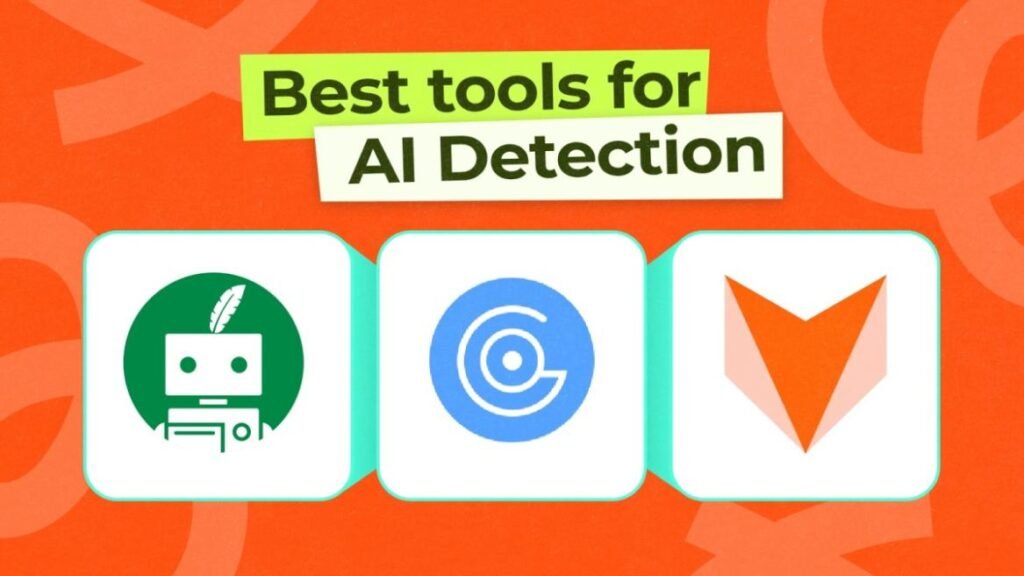
Here are some AI detection tools you can look into to get you started.
Conclusion
AI detection tools exist because the internet is changing rapidly. As AI-generated content becomes more common, people naturally want ways to identify authenticity.
That concern is understandable, but the technology itself remains imperfect. And when imperfect systems are used to judge students, workers, journalists, or creators, mistakes become dangerous very quickly.
Right now, AI detectors are best viewed as rough estimation tools. Not reliable judges of truth. At least for now, human judgment still matters far more than a percentage score on a screen.
Latest Posts
- Why Is Life Still So Expensive in the UK?
- How AI Is Changing Jobs and the Skills Workers Need
- Online Gaming Safety Is Worrying Parents: How Can Families Protect Children Without Banning Technology?
- Football Spending vs Success: The Truth About Premier League Clubs
- University or Apprenticeship in the UK: How to Choose the Right Path
