
Dr Linda Lee: From Engineer to Harvard Surgeon — Lessons in Innovation, Authenticity and the Future of Medical Aesthetics
The intersection of structural design and human anatomy is a fascinating frontier in modern medicine. When we think of facial plastic surgery, we often picture an artist’s delicate touch or a physician’s deep anatomical knowledge. Rarely do we immediately consider the mathematics of load-bearing structures, vectors of tension, and material science. Yet, this precise combination is what defines the brilliant career of Dr Linda Lee. Dr Linda Lee: From Engineer to Harvard Surgeon is an inspiring journey. It highlights how her expertise and patient‑centred work in Behind the Face series makes her contributions stand out in the field.
Bringing an analytical, systems-based approach to the operating theatre, this Harvard surgeon has redefined what it means to merge technical precision with aesthetic vision. Her journey offers profound insights into the rapidly evolving landscape of cosmetic medicine.
-
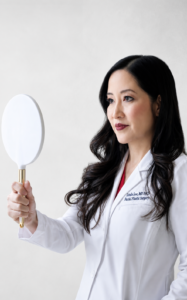
Dr Linda Lee blends engineering precision with medical expertise to advance facial plastic surgery and aesthetic medicine. In this article, we will explore the pivotal moments of transitioning from engineering to medical school, the profound impact of science-based aesthetics, and how the synthesis of these disciplines is shaping the future of aesthetic medicine.
The Unconventional Path: From Blueprints to Anatomy
The journey into medicine rarely follows a straight line, but Dr Linda Lee’s background provides a uniquely powerful foundation for facial plastic surgery. Transitioning from engineering to medical school is a demanding pivot. It requires shifting from the realm of inorganic materials and mathematics into the unpredictable, dynamic world of human biology.
However, the leap is not as disjointed as it may seem. In engineering, success relies on understanding structural integrity, tensile strength, and fluid dynamics. In facial plastic surgery, these exact same principles apply to skin elasticity, facial musculature, and the flow of blood through microscopic vessels.
The integration of bioengineering applications in plastic surgery has transformed the field. Modern dermal fillers are essentially advanced biomaterials which require an understanding of rheology (how materials flow and deform). Lasers and energy-based devices rely on the physics of light and heat absorption. By entering the medical field with this foundational knowledge, Dr Lee brought a unique, analytical perspective to facial reconstruction and cosmetic enhancement.
Actionable Takeaway for Aspiring Medical Professionals:
- Embrace diverse educational backgrounds: If you are considering a career in medicine, do not view a non-traditional undergraduate degree as a hindrance. Analytical, technological, and engineering backgrounds are increasingly highly sought after in modern surgical training programmes.
The Engineering Mindset in Facial Plastic Surgery
What exactly does an engineering mindset in facial plastic surgery look like in practice? It is the ability to view the human face not just as a canvas, but as a complex, three-dimensional architectural structure.
When a surgeon lifts sagging tissue, they are fundamentally altering the vectors of tension on the face. If the underlying support structure is weak, the overlying tissue will inevitably fail to hold its new position. Much like building a house on a fragile foundation, the result is unstable.
Understanding how engineering principles improve surgical precision allows surgeons to predict how tissues will age and settle over time. Instead of merely pulling skin tight—a dated technique that often led to the dreaded “windblown” look— modern surgeons focus on repositioning the deep structural layers of the face (such as the SMAS layer in a facelift). Moreover, they calculate load-bearing points. They utilise surgical techniques that ensure longevity and natural movement.
It is this exact mathematical rigour and structural understanding that sets Harvard-trained facial plastic surgeons apart in a highly competitive global market. Whether opting for the scalpel or the syringe, the ultimate goal remains the same: achieving natural results in cosmetic procedures. A successful outcome is one where the patient looks refreshed, well-rested, and harmonious, rather than visibly “done”. This requires a practitioner who understands that less is often more. Also, it requires someone who possesses the technical skill to execute subtle refinements.

Ethics, Authenticity, and Social Media
We cannot discuss the modern beauty industry without addressing the elephant in the room: the profound impact of social media and beauty standards.
The proliferation of photo-editing applications and augmented reality filters has created an environment where digitally altered faces are presented as reality. This has led to an evolution of facial aesthetic standards. For example, patients sometimes bring heavily filtered photos of themselves to consultations. They may ask the surgeon to replicate an anatomical impossibility.
This cultural shift places a massive ethical burden on practitioners. Maintaining ethics and authenticity in aesthetic medicine means having the courage to say “no”. It requires surgeons to educate patients on the reality of human anatomy. In addition, they must steer patients away from trend-based procedures that will not age well.
Championing Authentic Beauty
Authentic beauty is not about erasing every flaw, pore, or wrinkle. It is about enhancing one’s unique features and fostering confidence. True aesthetic medicine should empower patients, not feed into digitally induced dysmorphia. A responsible surgeon operates as a guardian of their patient’s long-term physical and psychological well-being.
A Comprehensive Guide to Facial Harmony and Personalised Care
The most sophisticated practitioners do not treat isolated wrinkles; they treat the entire face. A comprehensive guide to facial harmony involves assessing the face in aesthetic units and understanding how altering one feature impacts the perception of another.
For example, a patient might request rhinoplasty because they feel their nose is too prominent. However, an astute surgeon might note that the patient actually has a recessed chin. By bringing the chin forward, the projection of the nose is instantly balanced. This is the essence of personalised aesthetics.
To achieve this, clinics are increasingly integrating technology into cosmetic surgery practices. High-resolution 3D imaging allows surgeons to map the face, run simulations, and physically show the patient how changes will impact their overall facial harmony before a single incision is made.
Providing personalized patient care in modern aesthetics means moving away from a transactional relationship. It means building a lifelong partnership focused on graceful, healthy ageing.

Why Choose a Specialised Facial Surgeon?
With the boom in the aesthetic market, many medical professionals from diverse backgrounds are offering cosmetic procedures. So, why choose a specialized facial surgeon?
The anatomy of the head and neck is arguably the most complex in the human body. It is a dense, intricate web of critical nerves, major blood vessels, delicate musculature, and sensory organs. A specialist who dedicates 100% of their practice to the face possesses an intimate, three-dimensional understanding of this anatomy. Generalists simply cannot match this level of expertise.
When you select a professional with the rigorous background of Dr Linda Lee, you are not just paying for a procedure; you are investing in a profound depth of knowledge, an unparalleled safety profile, and an artist’s eye grounded in scientific reality.
Tips for Choosing Your Practitioner:
- Check their credentials rigorously: Ensure they are board-certified specifically in facial plastic surgery or a closely related specialist field.
- Look for consistency, not trends: Review their before-and-after portfolios to ensure they consistently deliver natural, harmonious results.
- Assess their consultation style: A good surgeon will spend time understanding your motivations and will not hesitate to advise against a procedure if it is not in your best interest.
The Future of Aesthetic Medicine
Looking ahead, the future of aesthetic medicine is poised to be heavily influenced by the merging of biotechnology, artificial intelligence, and engineering. We are moving toward an era where regenerative treatments will actually reverse cellular ageing. Instead of just masking it, they will address aging at the source.
We will likely see the development of smarter biomaterials that integrate seamlessly with human tissue. Robotic-assisted surgical tools will offer even greater precision. Yet, amidst all this technological advancement, the human element—the ethical judgement, the aesthetic eye, and the compassionate bedside manner—will remain irreplaceable.
Conclusion
The evolution of cosmetic surgery is a testament to human ingenuity. As we have explored through the lens of Dr Linda Lee: From Engineer to Harvard Surgeon — Lessons in Innovation, Authenticity and the Future of Medical Aesthetics, the best results are born from a marriage of disciplines.
By applying an analytical, engineering mindset to the delicate canvas of the human face, modern surgeons can deliver safer, longer-lasting, and profoundly natural results. As the industry continues its rapid expansion, it is this unwavering commitment to science, structural integrity, and authentic beauty that will define the true leaders in the fascinating world of medical aesthetics.
