
Context is everything. We built Inside Success against a backdrop of systematic dismantling. What’s more? We witnessed the closure of youth services across Lambeth, Barking and Dagenham, Hammersmith and Fulham, Newham, Westminster, and Redbridge. We saw centres close their doors. They made thousands of dedicated staff redundant, leaving communities with a void where support and guidance used to be.
I worked in places like Stratford Circus, The Meeting Place, and the Tooting Hub. I saw the work in care homes and youth provisions across these boroughs. They pulled apart infrastructure built over generations. I saw experienced workers displaced, budgets slashed, and the safety net removed.
Out of that vacuum, we created a solution. We launched a magazine and created opportunities. We provided structure where the state had walked away.
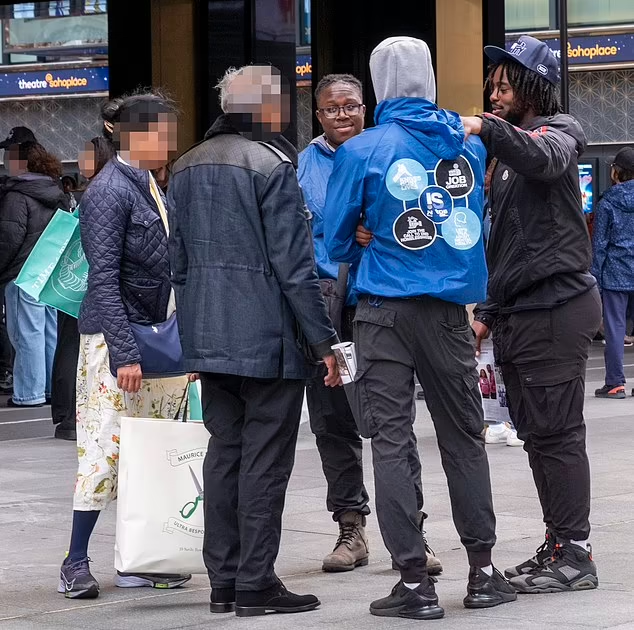
But the reception we received raises a difficult, unavoidable question. If the leadership was from a different background, and the beneficiaries were from a different community, would the narrative have been different?
Consider the comparison
Look at organisations like The Big Issue. We see their founder celebrated. There are images of Prince William and King Charles holding the magazine, endorsing the work, and framing it as a noble endeavour, a lifeline for those in need.
They respect it, legitimize it, and view it as essential.
And then we look at ourselves.
We operated in the same spaces, helped the vulnerable and built confidence among the youths. We created friendships and kept people engaged and off the streets. The social value was, and remains, immense. Inside Success changed lives and gave direction to young people who needed them. We built futures from the ground up.

Yet the headlines told a different story.
We were labelled as a nuisance. We were ridiculed and constantly face legal action. The Westminster Council, for instance, has dragged us to court. We were targeted by the press. Headlines in the Daily Mail, the Mail on Sunday, The Guardian, and features on ITV News focused not on the gap we were filling, but on how to stop us.
We received letters telling us to “get these coons off our streets,” to remove ourselves from train stations, to disappear.
We were treated not as a solution, but as a problem to be managed, or worse, gotten rid of.