
Most young people in the UK do not think about their credit score until they need something and get declined. A flat they wanted. A phone contract. A car finance deal. By that point, the damage is already done and it can take years to undo. The smarter move is to understand how this system works now, before it becomes a problem, and to start building a strong score while the stakes are still low.
Research from the University of Birmingham found that a low credit score does not just make it harder to get a loan. It can affect your ability to rent a home, get a mobile phone contract, and even find employment. That last one surprises most people. Some employers, particularly those in financial services and roles with security clearance, check credit history as part of their hiring process. Your score is not just a banking number. It is a record of how you manage your financial life, and it follows you.
How the UK Credit System Actually Works
Here is something that confuses a lot of people. The UK does not have one credit score. It has three.
Experian, Equifax, and TransUnion are the three credit reference agencies operating in the UK, and each uses a different scoring scale and different underlying data. Experian scores run from 0 to 999. Equifax runs from 0 to 1,000. TransUnion runs from 0 to 710. A good score on one scale does not automatically mean a good score on another, because not every lender reports your activity to all three agencies.
Crucially, the score you see on a free app is an educational score, not the number a lender actually uses. Banks and lenders run their own internal models using data from one or more of the three agencies. That said, improving the data on your file at each agency will improve how lenders view you, regardless of which system they use.
According to a 2026 guide published by MoneySavingExpert, you can check your score for free at all three agencies without affecting your rating. Checking your own score creates what is called a soft search, which lenders cannot see. Only hard searches, which happen when you apply for credit, are visible to lenders and can temporarily lower your score. Check your score monthly. It costs nothing and gives you an early warning if something goes wrong on your file.
What Actually Determines Your Score
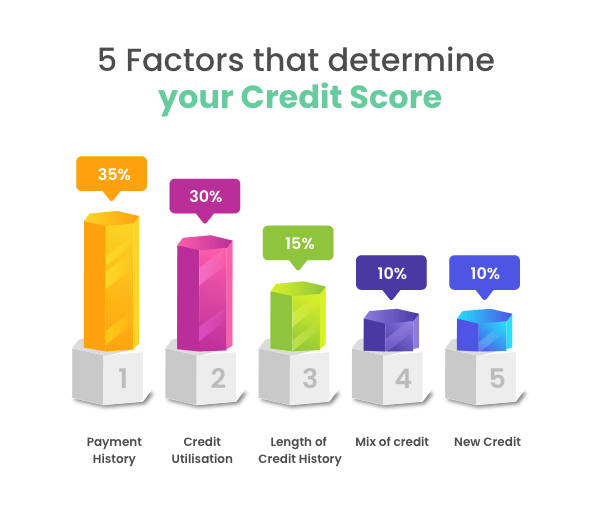
Payment history is the single biggest factor. Every missed payment, default, County Court Judgement, or Individual Voluntary Arrangement sits on your file for six years. A single missed payment can drop your score by 50 to 100 points and stays visible to every lender for the full six-year period. Setting up direct debits for every bill, credit card minimum payment, and loan removes the human error from this entirely. Do it once and let it run.
Credit utilisation is the second most important factor. This measures how much of your available credit you are using at any given time. Using more than 30% of your total credit limit is a risk signal to lenders. Staying below 10% is considered optimal. If your credit card limit is £1,000 and you carry a balance of £400, your utilisation is 40%, which actively hurts your score. Paying it down to £100 or below makes a meaningful difference quickly.
Being on the electoral roll is essential and often overlooked by young people, especially those who move frequently. Registering at your current address is one of the fastest improvements available. According to 2026 credit score data, registering on the electoral roll can add between 50 and 100 points within one to two months. Many lenders automatically decline applicants who are not on the register. Register for free at gov.uk/register-to-vote.
The Changes That Affect Young People Most
Credit scoring in the UK shifted meaningfully in 2025. More weight now falls on everyday financial habits rather than just long account histories. How you manage your overdraft, how consistently you pay rent, and how you handle smaller regular commitments all matter more than they used to.
This change is largely positive for young people. Previously, the biggest advantage in credit scoring was simply having a long financial history, which young people by definition do not have. The updated models now recognise active, responsible financial behaviour even over shorter time periods. Paying your bills on time, keeping your utilisation low, and avoiding multiple credit applications in a short window all build your score more quickly under the current approach.
Buy Now Pay Later schemes are another area worth understanding clearly. From July 2026, unregulated BNPL agreements in the UK will become subject to FCA regulation for the first time. That means BNPL usage will start appearing on credit files in a more formal way. Using these services responsibly is fine. Defaulting on them will carry the same consequences as defaulting on any other form of credit.

Six Practical Steps to Build Your Score Right Now
Start with the electoral roll. Register at your current address immediately if you have not already done so.
Set up direct debits for every regular payment. This removes the risk of a missed payment through forgetfulness, which is how most young people damage their score without realising it.
Get a credit-builder card. These are cards designed specifically for people with thin or no credit history. They carry low limits and high interest rates, but if you spend a small amount each month and pay the full balance before the due date, you build a positive payment history quickly. Clear Score and Experian both offer free eligibility checks that show which cards you are likely to be approved for without triggering a hard search.
Keep your utilisation below 30% at all times. If you have a £500 limit, keep your balance below £150.
Avoid applying for multiple credit products in a short period. Each hard search temporarily lowers your score. Space applications out by at least three months wherever possible.
Check all three of your credit files for errors. Mistakes on credit files are more common than most people realise, and an error you did not cause can cost you a mortgage or a rental. Dispute any inaccurate information directly with the relevant agency.
Your credit score is one of the most underrated financial assets you can build in your twenties. The habits that create a strong score cost nothing, require minimal effort once set up, and pay back significantly when the decisions that matter most come around.
