
Over a dozen Artificial Intelligence (AI) accounts of Black women are being removed from TikTok for promoting racist and sexually inappropriate content.
AI seems to be adapting at a rapid pace, and concerns have risen about how ethical it actually is. In recent news, the short-form video platform, TikTok, has been flagged for its rise of fake accounts. More concerningly, AI-generated profiles of Black women are spreading racially-motivated hate speech and sexually inappropriate content.
The problem has been flagged by various news outlets, including the BBC, which has launched an official investigation. In addition, TikTok creators have been calling the problem out, flagging the rise of these accounts, and showing people how to tell apart real Black content creators, from AI slop.
The finer details…
So far, a total of 20 accounts have been flagged and reported. Additionally, a large proportion of the fake accounts are also said to have pages on Instagram. Both of which have accumulated thousands of followers in short bursts of time. This is one of the reasons these AI accounts have been detected in the first place. Activity on the accounts shows unrealistic growth in followers and activity in short periods of time.
So far, the accounts have been issued for creating sexually inappropriate content of Black women on TikTok and Instagram. They feature fake videos of half-dressed women promoting public indecency and using terms such as “black”, “noir”, “dark” and “ebony” for their account names.
Meta reportedly told the BBC that it was investigating the issue; however, no action has been taken. So far, the BBC is the only organisation that has investigated the matter and drawn further attention to it.
- How To Create a Digital Portfolio Using Free Tools
- You’re a Madman Until It Works: When Vision Makes You Look Mad
- New Info Points to Where Children Are Buying Knives
- US and Iran Agree to Ceasefire: What Now?
- How To Spot The Internal Engine With This Leadership Litmus Test
What are Black people saying about this?
Various content creators, journalists and members of the Black community have spoken out about the issue online. One creator shared a video reacting to a series of AI-generated content of Black women. Few words were spoken because little was needed. Each facial expression he gives reflects shock towards the compilation of AI videos he’s put together to raise awareness.
Riya Ulan, an Asian model based in Malaysia, has become a victim of this. Duplicate accounts have been made of her on TikTok and Instagram, transforming her into a dark-skinned Black woman. TikTok has since reported and removed the fake accounts; however, the faux account of her remains on Instagram.
“I was angry,” Ulan tells the BBC. “Of course, my videos are all out there… It doesn’t mean that you can just take it and steal it and post it as your own.”
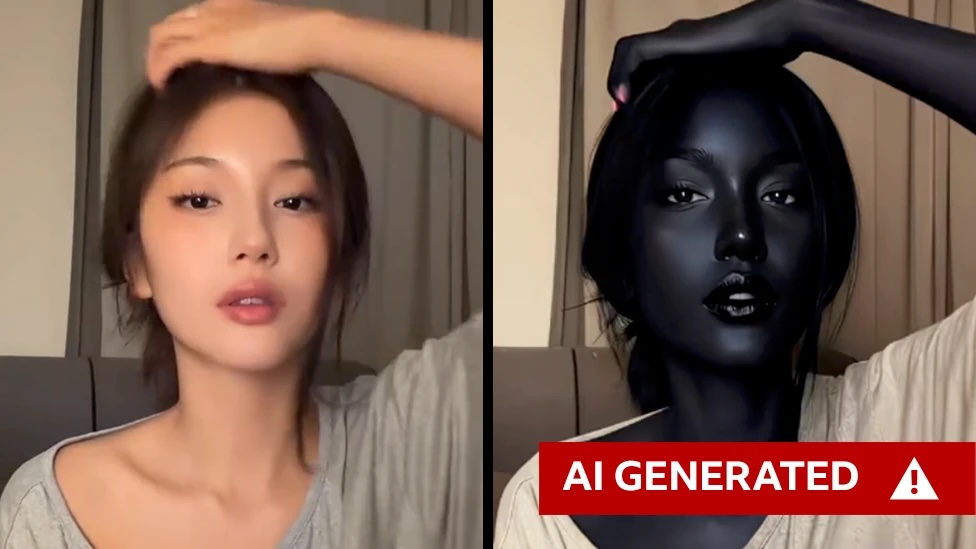
Although this topic has recently surfaced, it isn’t a new issue. Content curators have been flagging the problem since last year. One person, called Blavity, raised concerns about AI videos on TikTok creating a negative caricature of Black women. She feels a lot of them are stereotypical versions of Black women. Pushing a harmful narrative depicting Black women as “angry, loud, and ignorant.” She goes on to ask her followers, “How does it make you feel when you see videos like this depicting Black women?”
What message does this send to young Black girls?
This incident shows great concern about the misuse of AI online. It not only shows that it’s easy to create harmful messages and interact with AI, but that it’s not a system that is actively regulated properly.
What solutions are there?
While there are still things being put in place by Meta to ensure the safety and protection of young adults on TikTok. There are no official solutions as of yet. We propose that people actively report these accounts as soon as they’re made aware that they’re fake. In addition, provide as much evidence as possible when submitting those reports.
Moreover, it would be a good idea for TikTok to consider including new protocols for human protection. Meaning that the use of AI on the platform must be monitored and perhaps require passing a certain string of questions before it can be uploaded. This should help facilitate the protection of real human content. It would also help to stop the spread of misinformation and hate crimes.
If you’re a young Black girl who wants to read more stories about the Black experience and news that impacts you, become a member at Inside Success to discover more.

Laviea Thomas is a journalist at Inside Success who writes about film, music and politics.
Outside of that, she is an experienced freelance journalist with bylines in NME, The Quietus, Metal Hammer and more.
Over the years, Laviea has been an active panellist discussing fundamental conversations in the music industry, such as diversity and inclusion, and the importance of grassroots venues. She has been a panel guest for Kerrang! Focus Wales Festival, Future Yard and more.
