

If you’ve ever relied on the London Underground, you already know how essential it is.
The Tube is not just a transport system, though it is that. It is the backbone of daily life in London. Millions of people depend on the railway every day to get around to work, school and meetings.
However, behind that system are workers operating on killing schedules. They are subjected to long shifts and a constant pressure to keep moving people around. Those pressures, though, have reached a breaking point, and tube drivers are saying “no more”.
Why Tube Drivers Are Planning to Strike
The upcoming strikes are driven by concerns over working conditions. Most especially by a proposed shift in how drivers’ schedules are structured.
At the center of the issue is a proposed four-day work week. Of course, right out the gate, this sounds like more work hours per day. That, amongst others, are why the Tube drivers are protesting.
A 4-day work week sounds good initially, with fewer working days. This looks like better work-life balance, but the reality is way more complicated.
Drivers argue that this change could mean longer working hours per day, increased fatigue and greater safety risks. They insist it’s not about working fewer days. It is about how intense those days become.
For a job that already demands high levels of concentration and responsibility, fatigue is not something to take lightly.
Who Is Leading the Strikes? What Do They Want?
The strikes are led by the National Union of Rail, Maritime and Transport Workers (RMT).
This is perhaps the most influential transport union in the UK, and it has been vocal about protecting workers’ conditions.
Their position is that these changes:
- Increase workload without proper balance
- Compromise safety
- Do not adequately reflect the realities of the job
On the other side is Transport for London (TfL). TfL argues that these proposed changes would improve flexibility while costs remain the same.
What we now have is a familiar situation where workers say the changes go too far, but management says the changes are necessary. And when no agreement is reached, strikes become the next step.
When the Strikes Will Happen
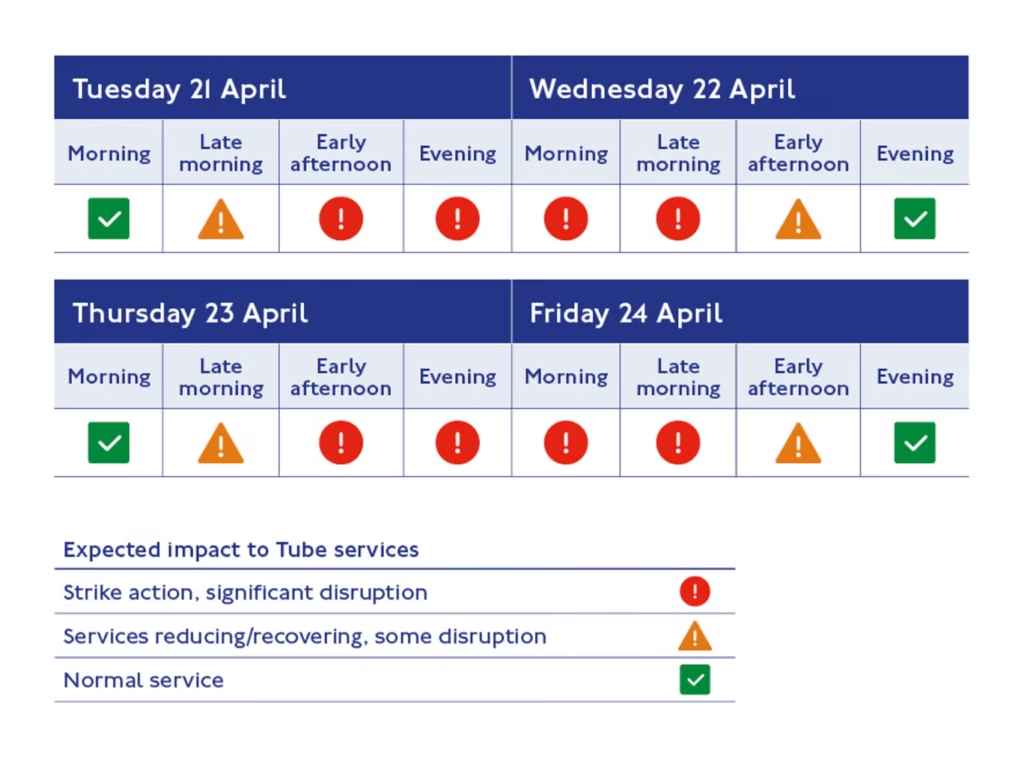
The disruption is not limited to a single day. They are scheduled across multiple dates between April and June 2026, affecting commuters over several weeks.
Confirmed April Strike Dates:
- April 21–22
- April 23–24
Each strike typically runs for about 24 hours, often starting around midday and continuing into the next day, but it doesn’t stop there. Additional strike days are planned for May and June, meaning the disruption will be spread out over time.
This makes it harder for commuters to simply “wait it out.”
How the Strikes Will Affect Daily Life
The impact will be widespread, as the London Underground is deeply integrated into the city’s daily operations. When it slows down or stops, everything else feels it.
During the strike periods, expect:
- Severe service reductions across multiple lines
- Complete shutdown of some lines
- Heavy delays on others
- Overcrowding across alternative routes
Most importantly, the disruption will not be limited to the exact strike hours. It’d likely start before the official strike begins and continue even after it ends. Services take time to recover, and that recovery period can still be chaotic.
This means commuters could face challenges for days, not just hours.
What Services Will Be Affected
The strikes will impact most of the London Underground network.
Some lines may:
- Run limited services
- Experience long delays
- Shut down entirely for certain periods
This creates a ripple effect, because when the Tube slows down, people shift to other transport options. And when that happens, those alternatives become crowded very quickly.
Even people who do not usually use the Tube will feel the impact.
What Will Still Be Running
It’s equally important to note that everything will stop. Some transport services are expected to continue operating, including:
- The Elizabeth Line
- Docklands Light Railway (DLR)
- London Overground
- Bus services
These will become the main alternatives during the strikes. However, they’d be extremely busy. So while they’d be available, they may not be as convenient as usual.
What This Means for Youth in the UK
If you’re in London during this period, planning ahead will do you a world of good. First, check your routes before leaving home. Don’t assume your usual line will be running.
Second, allow extra travel time. Journeys that normally take 30 minutes could take much longer.

Third, consider flexible options where possible:
- Work from home if allowed
- Travel outside peak hours
- Use alternative routes
If you can avoid unnecessary travel on strike days, that may also help reduce stress. For those who must travel, patience will be important. During a strike like this, delays are not just possible, they are inevitable.
Conclusion
At the heart of this situation is a balance. On one side, a city that depends heavily on its transport system. On the other, workers who want fair and safe conditions.
Strikes are never convenient. They disrupt routines, slow down movement, and create frustration, but they also highlight deeper issues within the system.
READ ALSO:
- New Tube Strikes in London: What They Mean and How They Will Affect Everyone
- New Report Finds Digital Technology is Imperative for Young Adults
- What Young People Need to Know About the UK Housing Crisis
- A Student’s Guide to the Best Meals to Make on A Budget
- How To Create a Digital Portfolio Using Free Tools
For London, the coming weeks will test both its transport network and its ability to adapt.
And for commuters, one thing is clear: getting around the city is about to require a lot more planning than usual.


