
The UK music industry has never made more money. It has also never paid its average creator less, in real terms.
That is the uncomfortable story inside This Is Music 2026, the annual economic report published by trade body UK Music on 17 November. Music contributed a record £8.4 billion to the UK economy in 2025, up 5.7% on the £8 billion recorded in 2024. Exports hit £5 billion. The industry supports 220,500 full-time-equivalent jobs.
And the people who actually make the music? Their income rose by 0.2% — while consumer prices rose 3.6%. In real terms, the average UK music creator took a pay cut in the industry’s biggest year ever.
Two industries, two pay packets
The report contains two income figures, and the gap between them is the whole story.
A survey of accountants and business managers covering established, top- and mid-level artists — people typically earning between £200,000 and more than £1 million a year — recorded income growth of 14.4% in 2025. The superstars had a very good year. Major tours by Oasis, Coldplay, Beyoncé and Dua Lipa filled stadiums and drove the record numbers.
UK Music’s separate Music Creators’ Survey tells the other story. Its respondents — artists, songwriters, producers and engineers earning on average around £30,000 a year — saw their income grow by just 0.2%. UK Music itself cautions that the two datasets cover different groups and are not a like-for-like comparison. But nobody disputes the direction: the top of the industry is pulling away from the middle and the bottom.
To put a face on the £30,000 average: a solo act playing a UK pub gig this month takes home a median of around £260 a show, according to the GX Index. That is the economy most working musicians actually live in — a few hundred pounds a night, a few nights a week, in an industry worth £8.4 billion.
Where does the £8.4 billion actually go?
The £8.4 billion figure is GVA — gross value added, the industry’s contribution to GDP. It is not a pot of money sitting there for artists to divide. It flows through record labels, streaming platforms, promoters, venues, publishers, collection societies, managers, agents and the taxman long before a songwriter sees a royalty statement.
Streaming is where the fight is. Streaming now accounts for the majority of recorded music revenue, and for over a decade creators have argued the split is broken: featured artists often receive tiny fractions of a US cent per stream, and session musicians can receive nothing at all from streaming, unlike radio, where performers are paid by law.
That argument has now reached Parliament. The Government’s creator remuneration working group has produced new label-led principles, adopted by the BPI and the Association of Independent Music and recommended to their label members, which the labels estimate will deliver tens of millions of pounds of new investment to support UK artists by 2030. All three major labels — Universal, Sony and Warner — will adopt them. The Government has also more than doubled its music growth funding to £10 million a year for the next three years.
Whether “tens of millions by 2030” moves the needle for a creator on £30,000 is another question. Spread across 158,700 full-time-equivalent music creators, even £30 million is under £190 each. The principles may matter more for legacy artists and session players than for the average independent.
The new pressures: algorithms and AI
Two forces are reshaping who gets heard — and therefore who gets paid. The report notes that algorithmic recommendations now play a growing role in discovery, while admitting more research is needed on how that affects UK artists’ visibility and earnings. And UK Music is pressing policymakers not to create a copyright exception that would let AI developers train on copyrighted music without permission — a fight about whether the next £8.4 billion is built on creators’ work with or without their consent.
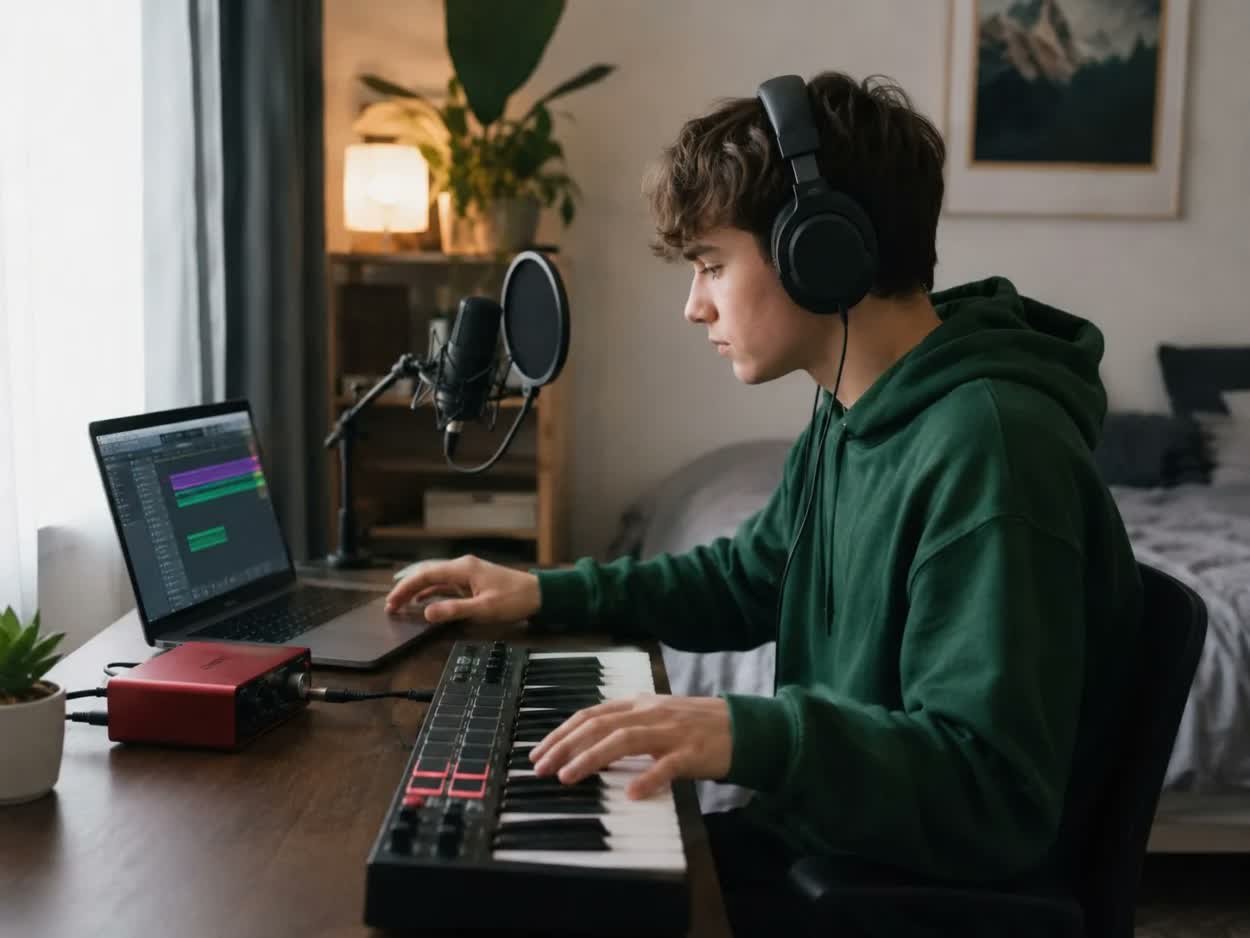
For a young artist starting today, the practical picture is this: production and distribution have never been cheaper, which means competition for attention has never been fiercer. The tools to release music are free. The audience is not.
The bottom line
UK music is a £8.4 billion success story with a £30,000 problem. The industry’s record year was built on stadium tours and streaming scale; the average creator’s pay packet did not keep up with the price of groceries. New label principles and government funding are steps, but steps measured in tens of millions against a multi-billion-pound industry.
If you are a young person who wants into this business, the lesson of the 2026 report is not “don’t bother.” It is: understand where the money flows before you sign anything. Own your rights where you can. Learn the business side as seriously as the craft. The £8.4 billion is real — the question is whether any of it reaches you.
Read next: How to Get an Apprenticeship When a Million Young People Have No Job and No Training · Who is Hannah Spencer? The plumber-turned-MP
Sources: UK Music, This Is Music 2026 (17 November 2026); House of Commons statement on music streaming label-led principles (Chris Bryant, Minister for Creative Industries); GX Index gig pay data (November 2026). Income figures from two different UK Music surveys — see report for methodology.
