
You’ve thrown your graduation cap in the air, packed up your messy university room, and finally landed your first “proper” job. What many of us aren’t prepared for, though, is the Financial Reality Check: that comes with navigating life after university and considering financial independence. You were promised that joining the professional world meant waving goodbye to baked bean dinners and constantly checking your bank balance with one eye closed. Yet, here you are, a few days before payday, rationing a loaf of bread and wondering where it all went wrong.
Welcome to The Financial Reality Check: Why You’re Always Skint at 22.
If you find yourself frequently typing “why am I struggling financially at 22?” into Google, you are far from alone. A lack of foundational financial literacy in the UK school system means millions of young adults are thrust into the real world completely unprepared for the financial realities of adulthood.
It is time to demystify the money maze. Let’s break down exactly where your hard-earned pounds are disappearing to, and how a solid dose of financial planning can turn your post-uni panic into long-term prosperity.

The Great Salary Illusion: Gross vs Net Pay
One of the most abrupt awakenings for young professionals revolves around managing entry-level salary expectations. When you sign a contract for £26,000 a year, it is easy to divide that number by 12 and imagine over £2,100 hitting your bank account every month.
Then payday arrives, and the actual number is significantly lower. This shock stems from not fully understanding the difference between gross pay and take-home pay.
Gross pay is the headline figure on your contract. Take-home pay (or net pay) is what is left after the government and your employer have taken their share through PAYE (Pay As You Earn). Deductions usually include:
- Income Tax: 20% on anything you earn over the £12,570 personal allowance.
- National Insurance: A separate tax that funds state benefits and the NHS.
- Student Loan Repayments: If you are on a Plan 2 or Plan 5 student loan, a percentage of your earnings over the threshold is automatically docked.
- Workplace Pension: Thanks to auto-enrolment, a percentage of your salary goes straight into your retirement pot.
Once these are stripped away, your £2,100 fantasy suddenly becomes a £1,750 reality. Adjusting your budget to reflect your actual take-home pay is the very first step in surviving your early twenties.
Moving Out: The Shock of Independence
If you have decided to rent a flat, whether alone or with flatmates, you have likely encountered the hidden costs of living alone. Rent is just the tip of the iceberg.
Young renters are routinely blindsided by council tax, water bills, energy tariffs, broadband connections, and the dreaded TV licence. Furthermore, moving into your first place requires you to pass referencing checks, which introduces many young adults to credit score factors for first-time renters. If you have no credit history—or a poor one from missed phone bill payments at university—you might find yourself rejected by letting agents or asked to provide a guarantor.
Actionable tip: Always budget an extra 20% to 30% on top of your base rent to cover utility bills and council tax safely.

The ‘Treat Yourself’ Culture and the Cost of Living
Let’s have an honest conversation about lifestyle inflation vs cost of living crisis.
On one hand, the UK is navigating incredibly high inflation. Rents are soaring, groceries cost more, and energy bills remain painfully high. Your struggles are partially systemic; everything genuinely is more expensive.
On the other hand, early twenties culture is rife with lifestyle inflation. You finally have a salary, so you start upgrading your life. You swap the student pub for expensive cocktail bars, you start buying premium groceries, and you treat yourself to Ubers instead of the night bus.
The Instagram Effect
Adding fuel to this fire is the financial impact of social media FOMO (Fear Of Missing Out). When your feed is flooded with peers enjoying city breaks in Europe, dining at aesthetic restaurants, and hauling the latest fashion trends, the pressure to keep up is immense. This leads to spending money you don’t have, simply to project a lifestyle you can’t yet afford.
The Silent Drain: Subscriptions
Another modern money trap is subscription fatigue and recurring expenses. A £10 Netflix account here, a £12 Spotify premium there, Amazon Prime, a gym membership you never use, and monthly beauty boxes. Individually, they look like pocket change. Collectively, they are stealthily draining hundreds of pounds from your account every year.
Actionable tip: Do a monthly “subscription audit”. Go through your bank statements, identify every recurring payment, and ruthlessly cancel anything you haven’t used in the past 30 days.
Escaping the Overdraft Trap
One of the most common financial mistakes in your early twenties is treating your student overdraft as free money or an extension of your income. During university, 0% interest overdrafts are a lifeline. However, usually within a year or two of graduating, banks begin to taper off this 0% buffer, eventually hitting you with staggering interest rates of up to 40%.
If you want to know how to save money on a graduate wage, your absolute priority must be clearing expensive debt.
Strategies to pay off student overdraft quickly:
- Acknowledge the Debt: Stop ignoring the minus sign in front of your balance.
- The Snowball or Avalanche Method: If you have multiple debts, either pay off the smallest balance first for a psychological win (Snowball), or tackle the one with the highest interest rate first to save money (Avalanche).
- Ring-fence your Overdraft: Ask your bank to reduce your overdraft limit gradually. If you pay off £100, reduce your limit by £100 so you cannot dip back into it.
- Use Windfalls Wisely: Any work bonuses, tax rebates, or birthday cash should go straight toward the overdraft until you are comfortably in the black.
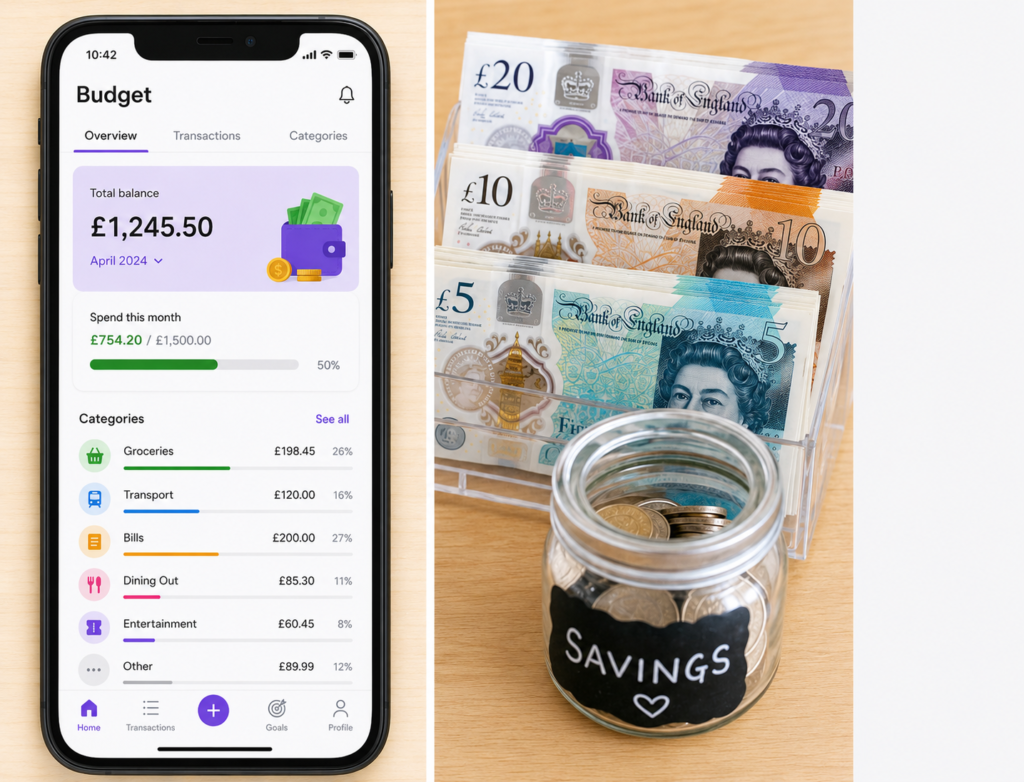
Taking Control: Budgeting, Saving, and Hustling
So, how do we fix this? Escaping the cycle of being skint requires active financial planning. You need a system.
Choose Your Budgeting Strategy
Gone are the days of keeping receipts in a shoebox. Technology has made tracking your money incredibly simple, but you need to find the system that works for your brain.
Many young adults swear by the best budgeting apps for young adults, such as Monzo, Starling, or YNAB (You Need A Budget). But there is a debate to be had over automatic savings apps vs manual budgeting.
- Automatic savings apps (like Plum or Chip) connect to your bank, use AI to calculate what you can afford, and quietly siphon small amounts into a savings pot. They are fantastic if you lack discipline.
- Manual budgeting forces you to actively sit down, track your spending, and allocate every pound. It is slightly more tedious, but it builds genuine financial literacy and awareness.
Prepare for the Unexpected
If there is one golden rule of personal finance, it is this: life will inevitably throw expensive surprises your way. Your laptop will die, your car will fail its MOT, or you’ll need an emergency dental procedure.
This is why building an emergency fund on a low income is non-negotiable. Even on a tight graduate wage, aim to save £10 or £20 a week. Do not worry about saving three months of living expenses right away—that goal is too intimidating. Start by aiming for a £500 safety net. Once you hit that, aim for £1,000. Having this cash buffer stops you from relying on credit cards when disaster strikes.
Boost Your Earning Power
Sometimes, no matter how much you cut back on takeaways and subscriptions, the maths simply doesn’t work. If your outgoings are fundamentally higher than your entry-level income, you need to bring more money in.
Exploring side hustles for recent graduates can provide that vital breathing room. The key is finding flexible work that doesn’t lead to burnout. Popular options include:
- Freelancing: Using your degree skills (graphic design, writing, coding) on platforms like Fiverr or Upwork.
- Tutoring: Offering GCSE or A-Level tutoring online or in your local area.
- Selling second-hand clothes: Flipping vintage finds or simply clearing out your university wardrobe on apps like Vinted or Depop.
- Market Research: Participating in paid online focus groups or surveys during your evening commute.
The Financial Reality Check: Your Next Steps
Needing a financial reality check isn’t a personal failure; it is a universal rite of passage. Figuring out how to navigate taxes, rent, inflation, and social pressures on a starting salary is objectively difficult.
However, being skint at 22 does not mean you are destined to be skint forever. By understanding your actual take-home pay, ruthlessly cutting the hidden costs of living, avoiding social media spending traps, and building a proactive budget, you take the power back.
Start small today. Download a budgeting app, cancel that streaming service you haven’t watched since Christmas, and move £20 into a savings account. In a few years, when you are financially secure and confidently managing your money, you will look back on the days of counting pennies for a pint with a smile, rather than a shiver.

