


When I first walked into a high-street bank to ask for business funding, I didn’t walk out with a loan. Instead, I walked out with a bruised ego and a head full of jargon.
The bank manager almost laughed. He threw words like “sustainability,” “accessibility,” and “financial belief” at me until my confidence hit the floor. I remember thinking ‘I will never do that again’.
Since then, I have turned over £13 million across my businesses. I didn’t need their “belief” to build a media and entertainment empire, but my experience highlights a systemic crisis in the UK. For Black British entrepreneurs, the path to finance isn’t a ladder, it’s an obstacle course hidden under a rock.
1. The Knowledge Gap vs. The Information Gate
The first barrier isn’t just a lack of money, it’s a lack of transparent knowledge. In “Old Guard” business circles, financial literacy is passed down like an inheritance. In our community, the “know-how” is often hidden. We aren’t always told how to structure a balance sheet for VC readiness or how to leverage Enterprise Investment Scheme (EIS) for tax-efficient investment.
When we do finally access the information, we find it’s buried under layers of gatekeeping. It shouldn’t feel like you’re “applying for a job” just to get an audience with a lender. Knowledge should be an open door, not a secret handshake.
2. The “People” Premium: Who You Know vs. What You Build
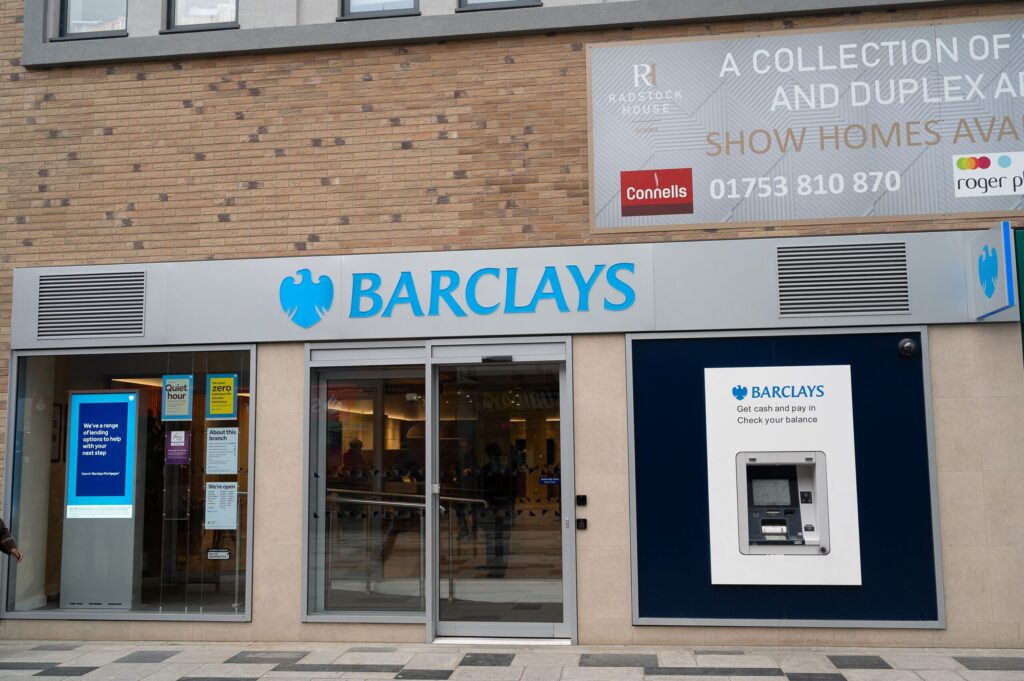
A Barclays Bank in Slough High Street, Berkshire
Daily Life, Slough, Berkshire, UK – 29 Jan 2026
My experience has taught me a hard truth: You don’t apply for funding; you network for it.
In the UK, it feels nearly impossible to simply “apply” and be judged on your metrics alone. It almost always requires a “warm intro” or knowing the person at the other end of the desk.
If you don’t share the same social circles as those holding the purse strings, your results are ignored. Man times, you’re ignored in favor of a “legacy” founder with a PowerPoint and the right connections. This “People Premium” is the silent killer of Black British innovation.
3. The Double Standard of Due Diligence
When we finally get in the room, we are held to a standard of “Financial Belief” that our peers are not. I’ve seen it time and again: different interest rates, terms, and scrutiny that feels more like an interrogation than a partnership. We are asked for three years of “sustainability” while others are given millions based on “potential.”
There is a complete lack of leeway and education from the banking perspective. Instead of saying, “Here is how we can help you bridge the gap,” the system says, “You don’t fit our mould.”
Why the “Financial Rock” Must Be Lifted
This isn’t just about fairness, it’s about economic intelligence. By gatekeeping finance, the UK is missing out on fast-growing, high-resilience businesses. If I could turn over £13m while being “laughed at” by bank managers, imagine what the Black British business community could achieve with fair access to the “levers” of finance.
This is exactly why I am an advocate for Decentralized Finance (DeFi) and Web3:
- Neutral Systems: We need systems that judge us on our Smart Contracts, not our social circles.
- Transparency: We need lending that doesn’t depend on who you know at the golf club.
- Empowerment: We need education that allows founders to speak the language of the boardroom without losing the grit of the “mud.”

I build Inside Success, My Sounds Global, and U Got Jokes, despite being held back by this financial “Iron Curtain”.
So, to the bank manager who laughed: the numbers don’t lie. To the founders currently being told “no”: the rock is heavy, but we are building the tools to lift it.

Leave a Reply
You must be logged in to post a comment.