
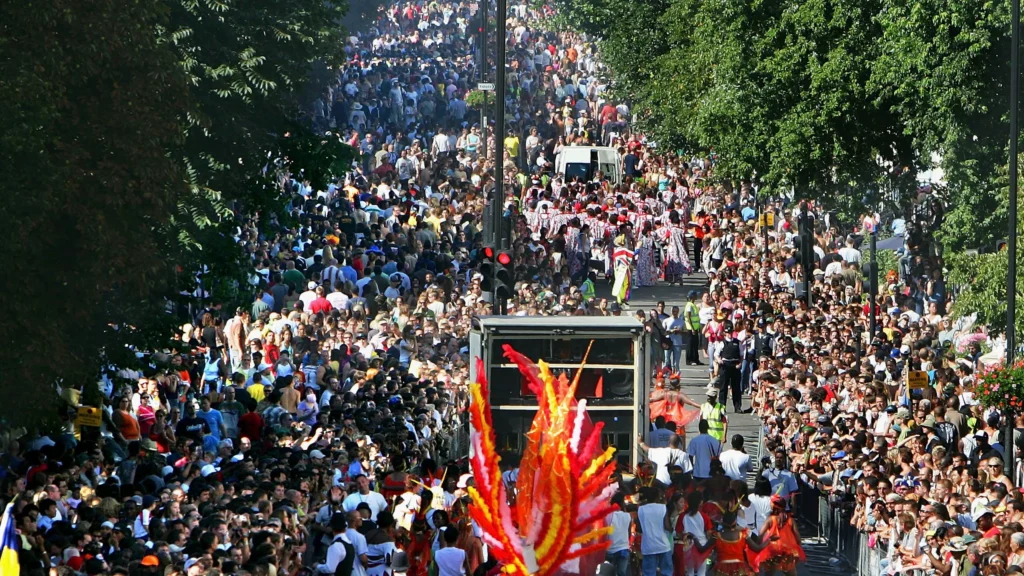
This August, London came alive with one of the most iconic scenes in the city’s cultural calendar. That is Notting Hill Carnival. Two million people (yes, two million) poured into the streets, draped in feathers, sequins, and Caribbean flags, transforming Notting Hill into a vivid tableau of Caribbean pride, rhythm, and unity. But beyond the zest and sound systems, this year’s Carnival signalled hope. Violent incidents dropped and safety was lifted—what does that mean for young people and the future of community culture?
Notting Hill Carnival is in Full Swing: Culture at Its Core
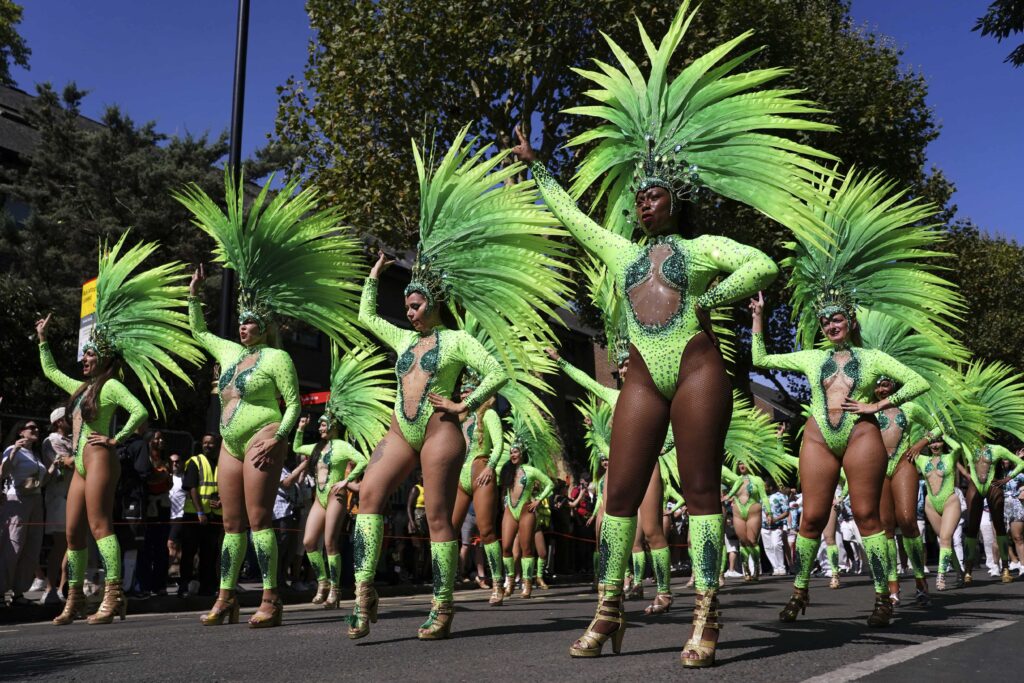
At its core, Notting Hill Carnival is more than a party. Born in the 1960s by the Windrush generation, it became a defiant celebration of Black creativity, identity, and resistance. Fast forward to today, it remains a powerful declaration of heritage. DJs, masqueraders, and samba schools like Paraiso turned the streets into a global cultural hub with Soca, Reggae, and African beats uniting masses.AP NewsReutersWikipedia
Safety on the Streets: Less Violence, More Vibes
For many, concerns lingered after last year’s Carnival turned tragic. Yet, this year, the mood was different.
- 423 arrests in total—up from last year’s count, but with “far fewer incidents of serious violence.”The SunReutersSky NewsThe IndependentLondonWorld
- Just two stabbings, both non-fatal and thankfully not life-threatening.The SunThe IndependentLondonWorld
This wasn’t luck—it was strategy. Thousands of officers worked overtime with knife arches, stop-and-search powers, drones, and live facial recognition (LFR) at the approaches to the Carnival.The TimesThe SunSky NewsThe IndependentLondonWorld
So What’s at Stake for Young People?
1. Notting Hill Carnival is A Safe Space to Belong
For young Britons—especially those of Caribbean, African, or Latinx heritage—Carnival is a space to shine, dance, and connect with culture. Seeing it thrive safely fuels pride and affirmation.
2. Notting Hill Carnival is A Stage for Expression
Carnival is a creative lab in the streets. It’s where young designers, dancers, DJs, and fashion lovers showcase raw talent and identity without filters. That visibility matters.
3. A Blueprint for Safe Public Spaces
This year proved major cultural festivals can be safe—and still feel alive. Young urban communities deserve these kinds of spaces to gather without constant fear.
4. Surveillance vs. Freedom
Yes, the tech kept things smooth—but LFR and drone surveillance also raise real worries. Historically, surveillance technologies can misidentify or disproportionately target marginalized communities. Young voices are divided: some see it as protection; others call it intrusion.The TimesThe IndependentThe Guardian
Stressed but Saving the Soul of the Notting Hill Carnival
Let’s talk survival: Carnival almost didn’t happen this year.
Despite its cultural weight, the event was forced to scrounge for funding. Nearly £1 million was raised in the eleventh hour by the Mayor’s office and local councils to cover safety and infrastructure costs.ReutersThe Guardian+1
Organisers warned that without stable, long-term investment—from arts bodies, the government, or sponsors—Carnival could vanish—or change beyond recognition, moving away from street roots.The Guardian+1 Airing calls for structural support isn’t just nostalgia—it’s about protecting a living piece of culture that anchors so many young Londoners.
What Young People Can Do Right Now
Here’s how youth can amplify this moment:
- Speak Up for Funding — Tweet, TikTok, or share posts calling for long-term investment in public culture, not just one-off bailouts.
- Defend the Streets Not the Screen — Advocate for safe, creative, communal spaces where culture can breathe, not be ticketed out of existence.
- Watch the Watchers — Get educated on surveillance tech like LFR. Demand transparency, accountability, and oversight—not just in Carnival, but city-wide.
- Lead in Creative Spaces — Shoulder props, masks, playlists, cars, trucks—whatever DIY scene you can build. Carnival is a stage for everyone.
The Bottom Line
Carnival 2025 was more than colourful costumes—it was hope in motion. Young people showed up, culture thrived, and violence dropped. But survival hangs by threads: funding is fragile, technology intrusive, and memory short.
This isn’t just a celebration—it’s a promise to the next generation: their culture matters, their spaces should stay alive, and their voices are part of keeping that rhythm going.
Stand up. Speak out. Because when young people lead, communities don’t just celebrate—they evolve.
Thank you for reading, click the link to read more of our Opinion Articles
