
The British job market is beginning to reveal a paradox that could reshape careers for an entire generation: artificial intelligence is making some workers more productive, while simultaneously making it harder for others to get their first opportunity. At a time when AI was expected to create new pathways into employment, recent labour-market data suggests something more complicated is happening. Employers are increasingly looking for people who can combine professional experience with AI capability, creating what Indeed has described as a “two-speed” UK labour market.
The question, therefore, is no longer simply whether AI will replace workers. A more uncomfortable question is emerging: will AI make experience more valuable and entry-level workers less valuable?
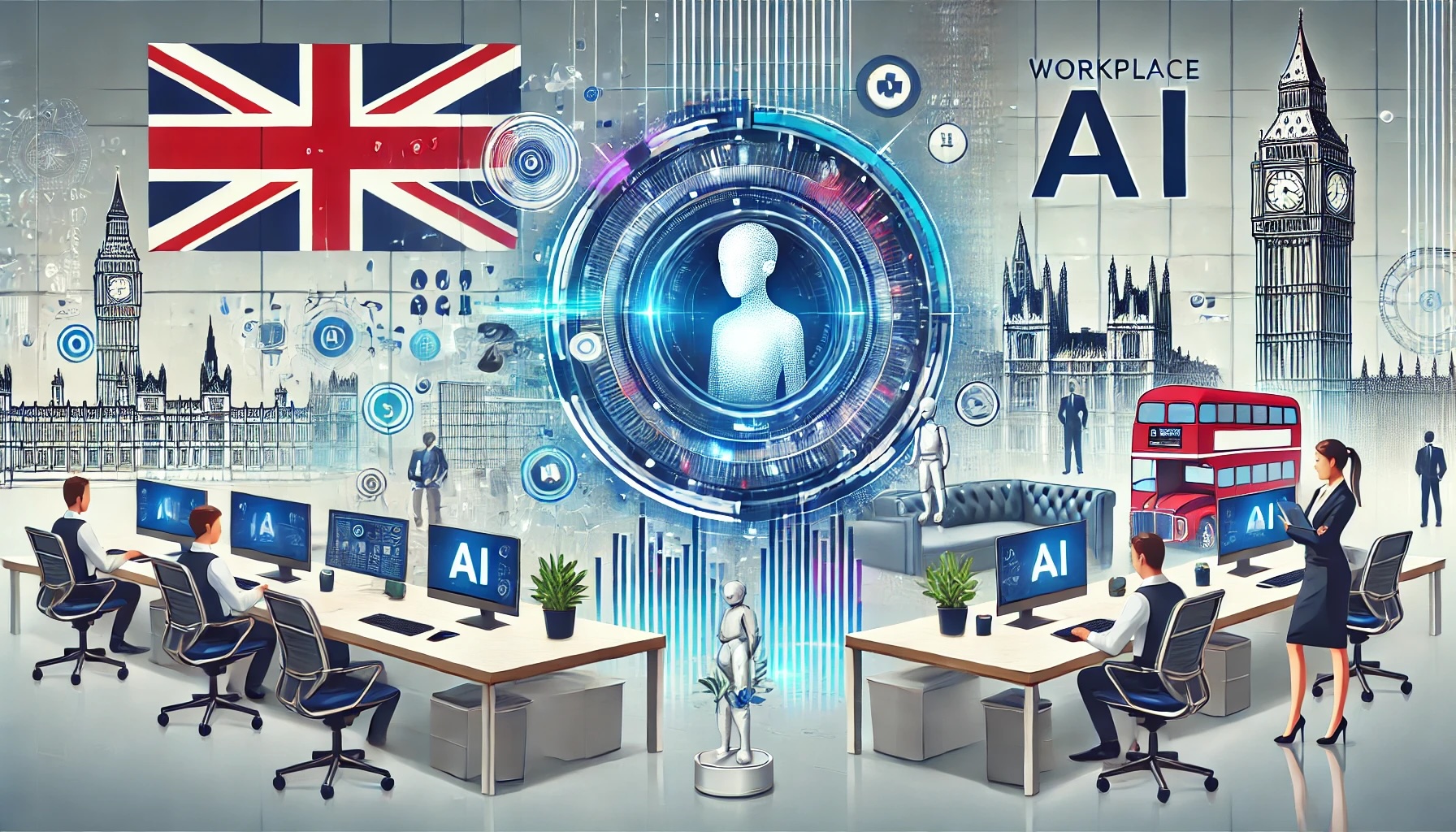
The UK Job Market Is Splitting in Two
The latest figures paint a striking picture. Indeed, UK labour-market data shows that overall vacancies remain under pressure, yet demand for jobs involving AI skills is moving in the opposite direction. By the end of June 2026, 9.4% of UK job postings explicitly mentioned AI or related tools and programmes, a record high. In data and analytics, the proportion was even more dramatic, with nearly half of postings mentioning AI.
This creates an unusual situation. Companies are not necessarily hiring more people across the board. Instead, they appear to be becoming more selective about who they hire and what those workers can bring to the organisation.
That distinction is crucial.
A company may no longer need several employees to perform repetitive research, documentation or basic analysis when AI can assist with those tasks. But it may still desperately need an experienced professional who knows how to interpret the information, challenge an AI-generated answer, make a difficult decision and take responsibility for the outcome. The value is shifting from simply doing the task to knowing what to do with the result.
Experienced Workers Have an Unexpected Advantage
For years, technological disruption was often presented as a threat to older or more experienced workers. AI is challenging that assumption.
Indeed, research found that software-development vacancies had recovered, with postings rising 14%, but much of the growth was concentrated in senior positions and roles directly connected to AI. IT and engineering were also among the areas where experience remained particularly valuable because AI could take over routine tasks while allowing experienced workers to concentrate on more complex responsibilities. That could fundamentally change the meaning of experience. An experienced accountant, for example, may use AI to analyse thousands of financial records faster than before. But the ability to recognise an unusual transaction, understand the commercial context and advise a client cannot necessarily be handed over to a machine. The same principle applies to lawyers, engineers, managers, doctors, marketers, journalists, financial professionals and countless others. AI may be able to accelerate the work, but experience helps determine whether the work is right.
AI Is Not Killing Every Job, It Is Changing What Employers Want
One of the biggest misconceptions surrounding artificial intelligence is that its impact can be measured simply by counting jobs lost. The reality is more complicated. PwC’s 2026 AI Jobs Barometer found that specialist AI job postings in the UK rose by 61%, reaching about 180,000 in 2025. It also found that workers with AI skills commanded an average wage premium of 34.2%. That does not look like a labour market in which AI is simply destroying employment. Instead, it looks like a labour market being re-priced. Certain skills are becoming more valuable. Certain tasks are becoming cheaper. Certain workers are becoming more productive. And employers are increasingly willing to pay a premium for people who can combine technological capability with professional expertise. This is where experienced workers may have an advantage. They already understand their industries. AI gives them another tool.
But There Is a Problem at the Bottom of the Career Ladder
If experienced workers can become more productive with AI, where does that leave someone who has just graduated? This may be the most troubling question raised by the current transformation.
Traditionally, young workers entered an organisation by performing relatively simple tasks. They learned through repetition, received supervision and gradually developed the experience required for more senior positions. But some of those basic tasks are precisely the ones AI can perform. The Bank of England has reported that AI adoption is reducing demand for some entry-level and junior roles traditionally used to provide early-career experience, including document preparation, invoice processing and basic analysis. Professional-services firms have also reported reduced graduate recruitment and lower demand for administrative and junior staff.
That creates a potential vicious circle. You need experience to get the job, but you need the job to get experience. If AI reduces the number of positions where inexperienced workers traditionally learned the basics, employers could unintentionally create a generation of candidates who possess qualifications but lack opportunities to develop practical expertise.
The Graduate Advantage Is Being Tested
The UK’s graduate labour market is already feeling the pressure. Indeed reported that graduate job postings reached their lowest level since 2020 during the first half of 2026, as overall hiring activity weakened. At the same time, demand for AI-related skills reached a record level. This does not mean university degrees are becoming worthless. Far from it. But the degree alone may no longer be enough. Employers increasingly want evidence that candidates can apply knowledge, work with technology, solve problems and make sound decisions.
A graduate who arrives with a degree and basic AI literacy could therefore be competing against an experienced professional who understands the industry and can use AI to deliver results faster. The distinction is becoming less about education versus experience and more about education plus capability versus experience plus capability.
AI Skills Are Becoming a Career Multiplier
The good news is that workers do not necessarily need to become computer scientists. Skills England’s 2026 annual skills report highlights the growing importance of practical AI literacy, the ability to use, verify and safely integrate AI tools. It also identifies judgement, problem-solving, collaboration and digital fluency as important capabilities in an AI-enabled workforce.
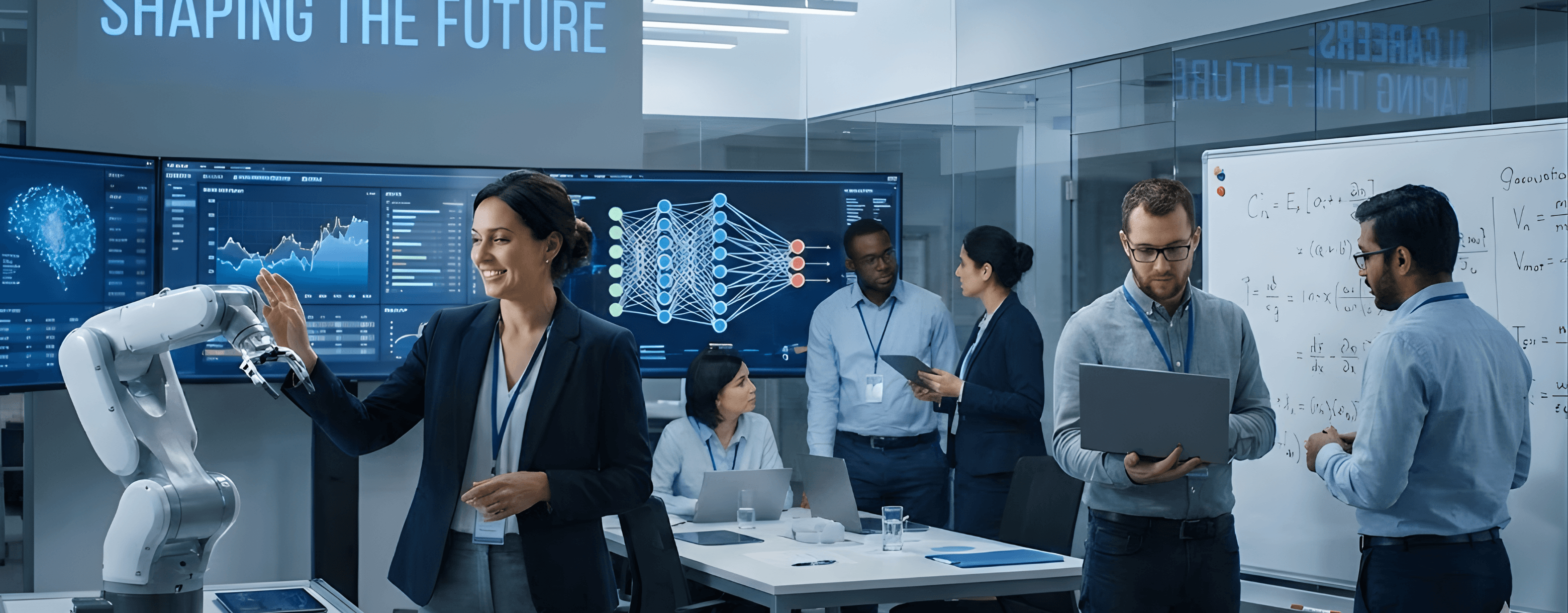
That is an important distinction. The future does not necessarily belong only to people who can build AI systems. It may belong to people who know how to use AI intelligently within their profession. A teacher who knows how to use AI to personalise learning. A solicitor who can use AI to accelerate legal research while independently verifying the output. A journalist who can use AI for research but understands accuracy, context and editorial judgement. A financial professional who can use AI to identify patterns but knows when a result requires deeper investigation. A manager who can automate administrative work and spend more time leading people. These workers do not replace their professional expertise with AI. They multiply it.
Human Skills Are Becoming More Important
Perhaps the biggest surprise in the AI revolution is that some of the skills becoming more valuable are deeply human. PwC found that AI-exposed roles are increasingly demanding skills such as leadership, judgement, creativity and interpersonal interaction. Its research also suggests that AI-exposed occupations are experiencing significantly faster changes in their skills requirements. Why? Because when machines become better at routine work, human beings have to move towards the areas where machines remain less reliable.
Judgement matters.
Leadership matters.
Empathy matters.
Communication matters.
Accountability matters.
Creativity matters.
The ability to understand people matters.
In other words, the future workplace may not be less human. It may demand better humans. The Two-Speed Market Could Become a Two-Generation Problem There is, however, a danger in this emerging labour market. If companies increasingly prefer experienced workers with AI skills, older professionals who already possess industry knowledge may become exceptionally valuable. But young people could struggle to enter the same professions in the first place. That would create a structural problem. Today’s experienced workers are tomorrow’s retirees. If organisations stop developing younger talent because AI allows them to operate with smaller, more experienced teams, businesses could eventually face a shortage of the next generation of professionals.
The UK government has already identified significant skills gaps within the AI sector. Its AI Labour Market Survey found that 97% of surveyed organisations identified at least one AI skills gap, while 35% reported difficulty filling AI-related positions. Lack of work experience was identified as one of the major barriers to recruitment. So the paradox is extraordinary: Companies need AI-skilled workers. They need experienced workers. Yet the system still has to create opportunities for people who are not experienced yet.
What Should Workers Do Now?
For professionals, the message is relatively clear: do not compete with AI, learn to work alongside it. Experience remains valuable, but experience without adaptation could eventually lose its advantage. Workers should identify the repetitive aspects of their roles and learn how AI can improve them. They should develop practical AI literacy, strengthen communication and analytical skills, and become comfortable verifying AI-generated information rather than accepting it blindly. For younger workers, the strategy may need to be even more deliberate. Build evidence of practical ability. Take internships seriously. Develop portfolios. Learn industry-specific AI tools. Complete real projects. Volunteer for technology-driven work. Demonstrate that you can solve problems rather than simply discuss them. The objective is to give employers a reason to believe that although you may lack years of experience, you can create value from day one.
The Future May Belong to the AI-Augmented Professional
The most valuable worker of the future may not be the person who knows the most about AI. It may be the person who knows enough about AI and a great deal about their profession.

That combination is powerful. AI can process information at extraordinary speed. Experience provides context. AI can generate possibilities. Human judgement determines which possibility is worth pursuing. AI can automate routine work. Skilled professionals decide what should never be automated. This is why the UK’s emerging two-speed labour market deserves close attention. It is not simply a story about technology replacing people. It is a story about technology changing the price of experience, skills and human judgement.
The Real Question Is No Longer “Will AI Take My Job?”
The British workplace is entering an era in which the safest career strategy may be neither resisting AI nor blindly embracing it. It is becoming difficult to replace. That means combining professional experience with technological fluency. It means developing the human capabilities machines struggle to replicate. And it means recognising that the most valuable employee may increasingly be the person who can take an AI tool, apply years of knowledge to it and turn its output into a decision that actually works.
The UK job market is changing and the divide may become increasingly visible between those who merely use technology and those who know how to use technology to amplify expertise. For experienced workers, that could be an extraordinary opportunity. For younger workers, it is a warning, but not a verdict. The career ladder may be changing, but it has not disappeared. The challenge now is to learn how to climb it in an age where AI is changing the first few steps.
Call to Action
Whether you are an experienced professional, a graduate or someone considering a career change, do not wait for the job market to tell you that your skills are outdated. Start learning how AI applies to your profession, strengthen the human skills technology cannot easily replace, and turn your experience or your willingness to learn into a competitive advantage. The future of work is already arriving; the question is whether you will be ready when it does.
