
The Lizzie Borden case remains one of the most discussed famous murder cases because it refuses to settle into a simple story. It involves a brutal double killing, a daughter accused and acquitted, a press frenzy, disputed evidence, and a verdict that never ended public suspicion. This guide explores Lizzie Borden: the true story behind the famous case, complexity of the evidence, what likely happened, lessons for youth, key takeaways, and a call-to-action activity.

What really happened in the Lizzie Borden case?
On 4 August 1892, Andrew Borden and his wife, Abby Borden, were found murdered inside their home in Fall River, Massachusetts. Lizzie Borden, Andrew’s 32-year-old daughter, was at home that morning, as was the family’s Irish servant, Bridget Sullivan; Lizzie’s older sister, Emma, was away. Abby was found upstairs, while Andrew was later found in the sitting room, and both had suffered repeated blows from a sharp weapon generally described as an axe or hatchet. (womenshistory.org)
Lizzie was arrested a week later and tried in June 1893. The prosecution argued that she had the opportunity, possible motive, and suspicious behaviour after the deaths. The defence countered that the state had no clear murder weapon, no bloodstained clothing, no direct eyewitness, and no conclusive physical proof tying her to the killings. On 20 June 1893, the jury found her not guilty, leaving the Lizzie Borden murder officially unresolved. (history.com)
The famous rhyme made the story sound almost cartoonishly certain, but it distorted key facts. Abby was Lizzie’s stepmother, not her birth mother, the number of blows was exaggerated, and the actual legal outcome was acquittal, not conviction. That gap between folklore and evidence is why the lizzie borden case still matters.
The background was tense before the murders
The Borden household was wealthy, but it was not especially comfortable. Andrew Borden had money and standing, yet he lived frugally in a modest house rather than in Fall River’s more fashionable neighbourhood. Lizzie, who moved in respectable church and social circles, reportedly wanted a more refined life than the one her father provided. (smithsonianmag.com)
Family tension also centred on Abby. Lizzie and Emma were Andrew’s daughters from his first marriage, and Abby was their stepmother. Accounts from the case suggest friction over property, inheritance, household control, and emotional loyalty. None of this proves murder, but it helps explain why investigators looked closely at the family rather than treating the attack as random.
Fall River itself added another layer. It was a mill town shaped by class, religion, immigration, and gender expectations. Newspapers and citizens did not simply ask, “Who had evidence against them?” They also asked whether a respectable white Protestant woman could be imagined as capable of such violence. That assumption influenced both public sympathy and suspicion.
Why is the evidence so complicated?
The evidence is complicated because much of it was circumstantial, some of it was excluded from trial, and several details pointed in different directions at once. The case looks strong if you focus on opportunity and suspicious behaviour, but weaker if you demand direct physical proof.
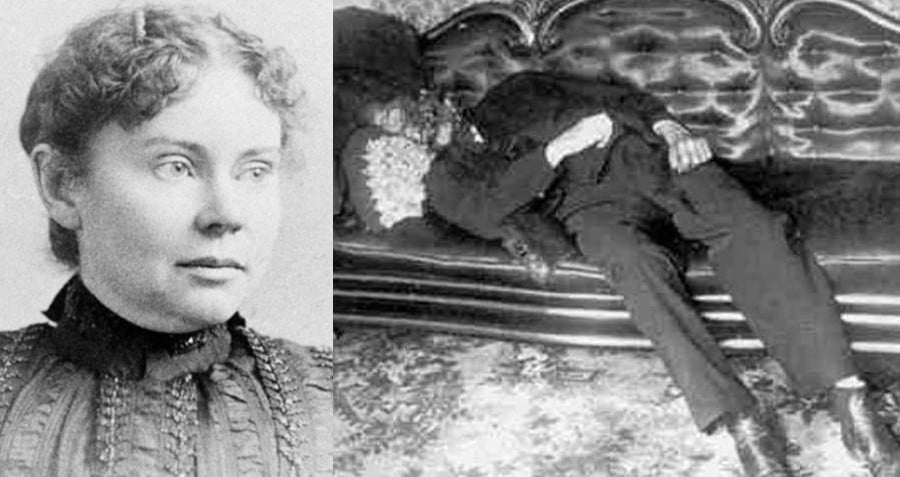
The prosecution had several points that made Lizzie difficult to ignore:
- She was in or near the house during the narrow period in which both murders occurred.
- Her statements about her movements were viewed as inconsistent.
- A family friend, Alice Russell, said Lizzie burned a dress after the murders, which Lizzie reportedly described as old and paint-stained.
- A drugstore clerk claimed Lizzie had tried to buy prussic acid before the killings, though this evidence faced legal difficulties.
- There was no convincing sign of burglary, and no obvious outsider was seen entering or leaving.
Yet the defence had powerful answers:
- No one saw Lizzie strike either victim.
- The police did not produce a confirmed murder weapon.
- The clothing issue was ambiguous, not conclusive.
- There was little blood found on Lizzie, despite the violence of the attacks.
- Some of Lizzie’s statements were excluded because she had not had legal counsel during the relevant questioning.
That last point is crucial. The trial was not a popularity contest about whether Lizzie seemed guilty. It was a legal proceeding requiring proof beyond reasonable doubt. When disputed testimony and weak physical links were removed or challenged, the prosecution’s case became much harder to prove.
The investigation also took place before modern forensic methods. There was no DNA testing, no blood-spatter science as it is understood today, and far less rigorous crime-scene control. People moved through the house, press coverage shaped opinion, and evidence that might now be preserved with strict procedure was handled in a very different world.
What likely happened?
The honest answer is that nobody can say with certainty who killed Andrew and Abby Borden. The most common theory is that Lizzie did it, largely because she had access, possible motive, and opportunity; however, the jury was right to require more than suspicion before convicting her.
If Lizzie was the killer, the crime likely depended on timing, privacy, and the ordinary rhythms of the household. Abby was attacked first, upstairs, while Andrew was away. Andrew was killed later after returning home and lying down in the sitting room. Bridget Sullivan’s movements, Emma’s absence, and the lack of an obvious intruder made Lizzie the central focus.
But “likely” is not the same as “proven”. Other possibilities have been proposed, including an unknown intruder, a family-related conspiracy, or another household figure. These theories have weaknesses too: they must explain how someone entered and left without detection, why robbery was not evident, and why no alternative suspect was successfully charged.
:max_bytes(150000):strip_icc():focal(984x311:986x313)/lizzie-borden-motive-091726-ae53d916b0e8485384aff79fd072a28f.jpg)
So the fairest conclusion is this: Lizzie Borden may well have been the most plausible suspect, but the state did not prove the case beyond reasonable doubt. That distinction is not a technicality. It is the foundation of a justice system that treats accusation and proof as different things.
What young people can learn from the case
The Lizzie Borden case is not just a grim true-crime story. Used carefully, it can help young people build critical thinking, media literacy, ethical judgement, and awareness of the justice system.
For critical thinking, the case teaches students to separate evidence from inference. A person may behave oddly under stress without being guilty. A motive may make a theory plausible without making it true. A missing weapon or unclear timeline should slow the rush to judgement.
For media literacy, the case is a powerful example of how stories become simplified. Newspapers, rumours, poems, films, podcasts, and online discussions can turn uncertainty into certainty. Young people can compare the nursery-rhyme version with court records and reputable summaries, then ask what changed and why.
For ethics, the case raises difficult questions about victims, suspects, class, gender, and public shaming. Lizzie was acquitted, yet she remained socially marked for life. That invites discussion about how society treats people who are legally cleared but publicly condemned.
For justice system awareness, the case shows why legal protections matter. The exclusion of certain statements, the need for admissible evidence, and the standard of reasonable doubt are not loopholes. They are safeguards designed to reduce wrongful convictions, even when the public wants a neat ending.
Lessons and key takeaways
The lizzie borden murder became famous because it combines horror, mystery, personality, and unresolved doubt. But its deeper value lies in what it teaches about evidence and storytelling.

Key lessons include:
- Circumstantial evidence can matter, but it must be tested. Opportunity, motive, and behaviour can support a case, yet each point needs scrutiny.
- A famous story is not always an accurate story. The popular rhyme made the case memorable, but it also blurred the facts.
- Media attention can distort justice. Public fascination can pressure investigators, witnesses, lawyers, and communities.
- Social assumptions shape interpretation. Views about class, gender, religion, and respectability influenced how people saw Lizzie.
- An acquittal is not the same as proof of innocence. It means the prosecution did not meet the required legal standard.
- Suspicion is not conviction. This is the central lesson of the case and the reason it remains worth studying.
The clearest takeaway is that uncertainty should not be treated as failure. Sometimes the responsible answer is not a dramatic verdict, but a careful acknowledgement of what can and cannot be known.
The enduring fascination is about more than murder
More than a century later, the case still appears in books, documentaries, museums, classrooms, and popular culture. Part of the appeal is the mystery itself. Part of it is the unsettling image of violence inside a respectable home. But another part is the way the story keeps changing depending on who tells it.
Some view Lizzie as a guilty woman who escaped punishment, while others see her as a victim of gossip, sexism, and sensational journalism. For many, she remains both a suspect and a symbol of how true crime can reveal as much about society as it does about an individual case.
That is why the case deserves more than a quick retelling. It asks readers to slow down, weigh sources, respect victims, question assumptions, and recognise the difference between narrative satisfaction and historical truth.
Call to Action
Try this activity on your own, in a classroom, or with a discussion group:
- Write two columns: Evidence against Lizzie and Evidence that creates doubt.
- Add at least five points to each side using reputable sources, not just folklore.
- Mark each point as fact, interpretation, rumour, or unknown.
- Decide whether you think the jury reached the correct legal verdict.
- Finish with one paragraph answering this question: What does the Lizzie Borden case teach us about judging people from incomplete information?
The goal is not to “solve” the case in an afternoon. It is to practise the habit this famous mystery still demands: think carefully, read critically, and never confuse a compelling story with proven truth.
