
A UK–EU “new deal” would not restore previous ties but could reshape trade, borders, energy and employment opportunities. This article examines how closer cooperation could affect food prices, jobs, energy security and border management across Britain. It presents potential benefits and challenges fairly, highlighting opportunities for businesses, workers and households alongside practical implementation concerns. Stronger cooperation could reduce friction, but both sides must address sovereignty, regulatory alignment, costs and distribute benefits fairly.
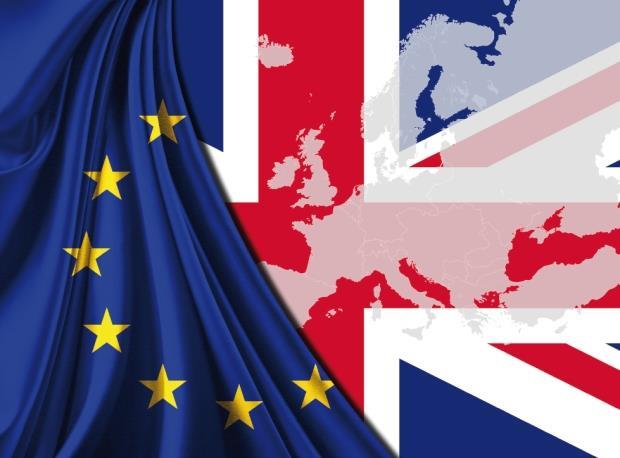
What would a UK–EU new deal actually mean?
A UK–EU new deal would most likely mean a package of sector-by-sector agreements rather than one sweeping settlement. Since the first formal UK–EU summit after Brexit in May 2025, both sides have discussed closer work on agri-food checks, electricity trading, emissions trading, youth mobility, security and defence, while the wider Trade and Cooperation Agreement remains the foundation of uk eu relations. (gov.uk)
That distinction matters. A new UK–EU agreement could make day-to-day trade easier without taking Britain back into the EU single market or customs union. Supporters see this as a practical reset: keep political independence, but remove avoidable costs. Critics worry that even limited alignment could mean accepting EU rules in key areas without having the same influence over how those rules are made.
So the real debate is not simply “closer or further away?” It is about where alignment helps, where flexibility matters, and whether the gains are shared by large exporters, small firms, workers and households alike.
Trade could become smoother, but not frictionless
Trade is the most obvious place to look for UK EU new deal impacts. For many businesses, especially those selling food, drink, plants, chemicals or components across the Channel, the post-Brexit problem has not only been tariffs. It has been forms, checks, rules of origin, certification and uncertainty.
A UK–EU agri-food agreement could reduce routine checks on animal and plant products and help exporters and importers move goods more easily between Britain and the EU. The UK government says the agreement could cut paperwork and reduce delays. These changes could strengthen supply chains and help food and drink businesses trade more efficiently. (gov.uk)
A small producer could benefit from fewer duplicated processes and greater confidence when accepting orders from EU customers. Supermarkets, wholesalers and hospitality businesses could enjoy more predictable supplies. Meanwhile, ports and logistics companies could improve planning and reduce bottlenecks through simpler procedures.

The challenge is that smoother trade usually comes with conditions. If Britain aligns with EU food or product standards in particular areas, some firms may welcome clarity, while others may dislike reduced room for regulatory divergence. There is also a political risk: if the deal is sold as a cure-all, disappointment may follow. Even a good agreement would not remove every border process, and it would not automatically solve weak demand, skills shortages or high operating costs.
Possible trade gains and limits:
- Lower administrative friction: fewer checks and certificates in selected sectors could save time and make exporting less intimidating.
- Better supply-chain reliability: businesses may find it easier to plan deliveries when rules are clearer and delays are less frequent.
- Limited scope: services, digital trade and many non-food sectors may see smaller direct benefits unless further agreements follow.
- Rule alignment concerns: closer access may require Britain to follow common standards in agreed areas, which some businesses will view as stability and others as constraint.
Food prices may ease at the margins
Food prices are a sensitive part of the conversation because households feel them immediately. If a new agreement reduces checks, paperwork and delays for food moving between Britain and the EU, it could lower some costs in the supply chain. In theory, that creates room for lower prices, better availability or less pressure on retailers.
But it would be wise to keep expectations modest. The price of food is shaped by energy, labour, weather, currency movements, global commodity markets, rents, transport and retailers’ own decisions. A UK–EU food deal could reduce one layer of cost, especially for fresh produce and animal products, but it cannot control every factor behind the weekly shop.
There is also a distribution question. Savings for importers do not automatically appear in the price paid by customers. Competitive markets can push savings through, but if other costs are rising at the same time, consumers may only notice that prices rise more slowly than they otherwise would have.
For businesses, however, even marginal improvements can matter. A restaurant relying on imported ingredients, a grocer managing short shelf-life products or a manufacturer using EU-sourced inputs may value reliability as much as lower costs. Fewer delays can mean less waste, better stock control and fewer last-minute substitutions.
Energy co-operation has practical promise
Energy is one of the less visible but potentially important areas of a renewed UK–EU relationship. Britain and the EU are physically connected through electricity interconnectors, and both face the challenge of balancing affordability, security and decarbonisation. Co-operation on electricity trading and emissions markets could therefore have practical value.
The EU Council has authorised negotiations on UK participation in the EU internal electricity market to strengthen energy security through aligned rules and more efficient trading. The UK and EU have also discussed linking their emissions trading systems. Such a link could reduce carbon-border complications and help energy-intensive industries compete more fairly. (consilium.europa.eu)
Better-connected markets could help Britain and the EU move electricity where demand is highest, especially as wind and solar power become more widespread. More efficient energy trading could improve price stability for businesses over time. Clearer market signals could also encourage investors to fund low-carbon infrastructure.
The challenge is also clear. Energy rules are technical, and alignment can have long-term implications. Britain would need to weigh any gains from market access against the loss of some freedom to design separate systems. There may also be costs linked to governance, compliance or financial contributions, depending on the final terms.
Would workers benefit from closer UK–EU relations?
Workers could benefit from a new deal that boosts trade, investment, youth opportunities and stability across key industries. Manufacturers could protect jobs, logistics firms could secure steadier business, and employers could expand as trade barriers fall. Agreed youth mobility schemes could also help young workers gain international experience and access new employment opportunities. However, some sectors may face adjustment if closer alignment changes competition, recruitment patterns or regulatory obligations.
Employment effects often arrive indirectly. By spending less time on border administration, firms may have more capacity to expand, train staff or enter new markets. More efficient energy trading could ease cost pressures on energy-intensive employers. Deeper security and defence co-operation could also create new opportunities across the defence, technology and engineering sectors.
Youth mobility is another area to watch. The UK and EU have explored a youth experience scheme, although the details have been politically sensitive. Such a scheme could help young people gain work and life experience abroad, and help employers in sectors that value language skills and international networks. Yet it would need clear limits, fair access and safeguards so it is not seen as free movement by another name.
For workers, the quality of the deal matters as much as its existence. A stronger trading relationship does not guarantee better wages, secure contracts or improved working conditions. Those outcomes depend on domestic choices too: skills policy, industrial strategy, enforcement of employment rights and support for regions exposed to economic change.
Questions workers and employers should ask:
- Which sectors will see direct benefits? Food, logistics, energy, manufacturing and defence may notice changes sooner than many service sectors.
- Will savings be reinvested? Lower administrative costs only help workers if firms use gains to expand, raise productivity or improve jobs.
- Will small businesses be supported? Large companies can absorb complex rules more easily; smaller firms need clear guidance.
- Will mobility be balanced? Any youth or skills scheme should work for both opportunity and public confidence.
Border security may improve through co-operation, but trust is essential
Border security is often discussed separately from trade, yet the two are linked. A border that is secure but painfully slow harms business. A border that is fast but poorly controlled creates public concern. The goal of a modern UK–EU agreement should be to make checks smarter, not simply lighter.
Closer co-operation could support data sharing, joint action against smuggling, better management of irregular migration and more effective law-enforcement links. The 2025 reset included a security and defence partnership, while later UK–EU discussions have included internal security and immigration co-operation. (questions-statements.parliament.uk)
The opportunity is that both sides face shared problems. Organised crime, trafficking, cyber threats and unsafe Channel crossings do not stop at political borders. Co-operation can make enforcement more effective, especially where information needs to move quickly.
The challenge is public trust. Any arrangement involving data, policing or migration must be transparent enough to reassure citizens that rights are protected and responsibilities are clear. Businesses also need confidence that security measures will not recreate the very delays that trade agreements are trying to reduce.
The political trade-offs cannot be ignored
A UK–EU new deal sits in a crowded political space. Some people want the closest possible relationship short of rejoining. Others see any alignment as a retreat from Brexit. Many businesses simply want predictable rules and less friction, without reopening old arguments.
That is why presentation matters. If ministers describe every agreement as a breakthrough, they risk overselling technical improvements. If opponents dismiss every compromise as surrender, they may ignore real-world costs faced by exporters, hauliers, farmers, retailers and workers.
A fair assessment should recognise both sides. Closer co-operation can reduce wasteful barriers and help Britain deal with shared European challenges. It can also involve obligations, dispute mechanisms and political compromises that deserve scrutiny. The right test is not whether the deal feels symbolic, but whether it improves practical outcomes while remaining democratically accountable.
A balanced way to judge any final deal
Before deciding whether a new UK–EU agreement is good for Britain, it helps to use a practical checklist rather than a slogan.
A sensible deal should:
- reduce unnecessary costs for businesses without creating hidden compliance burdens;
- make food and essential goods supply chains more reliable;
- support energy security and the transition to cleaner power;
- create credible opportunities for workers, apprentices and young people;
- strengthen border security while keeping legitimate trade moving;
- provide clear rules for parliamentary scrutiny and dispute resolution;
- help small firms, not just large companies with specialist legal teams.
If a deal performs well against those tests, it could be valuable even if it is limited. If it fails them, warm language about resetting relations will not be enough.
The likely outcome is practical progress, not a grand settlement
The future of uk eu relations is unlikely to be transformed by one signing ceremony. More realistically, Britain and the EU may continue building a patchwork of agreements in areas where both sides can see mutual benefit. That may sound unglamorous, but for businesses dealing with forms, checks and rising costs, practical progress can matter more than grand language.
The benefits could be real: easier trade, less pressure in parts of the food supply chain, better energy co-operation, more options for young workers and stronger border collaboration. The challenges are real too: regulatory alignment, political mistrust, uneven gains and the danger of promising more than any agreement can deliver.
A UK–EU new deal would therefore be best judged not as a victory for one side of the Brexit argument, but as a test of problem-solving. If it makes work easier, prices more stable, borders smarter and businesses more confident, it could be a meaningful step forward. If it becomes another arena for slogans, the opportunity may be missed.
