
That feeling of your stomach dropping before a big interview, or the frustration when your point isn’t landing in a meeting – we’ve all been there. It’s that moment of self-doubt that can make you feel small, holding you back from the opportunities you truly deserve. But what if you could turn that anxiety into authentic confidence? The truth is, becoming a powerful and respected voice in any room isn’t a secret talent; it’s about building a solid foundation of essential communication skills.
This is your ultimate guide to building that foundation. We’re here to give you the practical tools and actionable advice you need to transform how you connect with others. We’ll show you how to articulate your ideas clearly, build stronger relationships with colleagues, and navigate any professional conversation with self-assurance. Prepare to unlock your potential, make your voice heard, and accelerate your career journey.
Key Takeaways
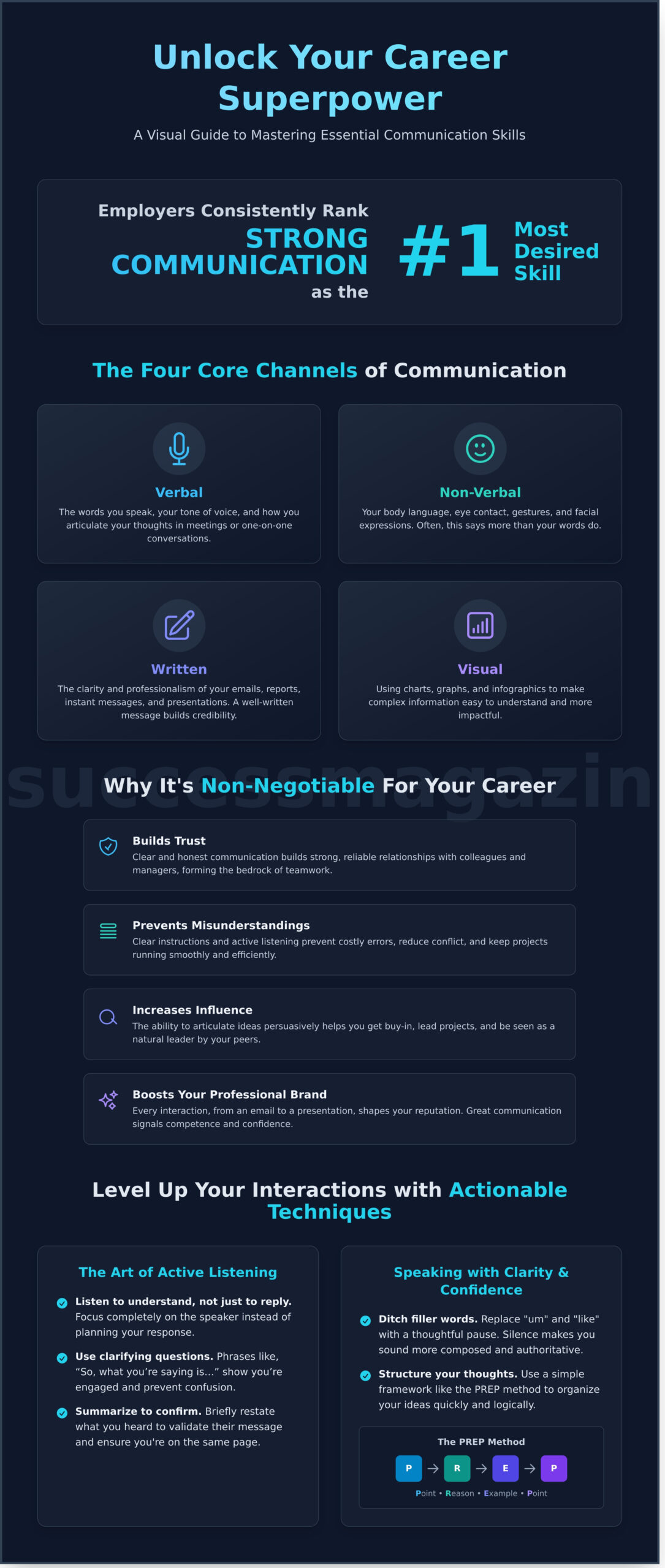
- Learn why effective communication skills are your career superpower, consistently ranked as the #1 trait employers look for.
- Transform your presence in meetings with practical techniques to boost your verbal clarity and project unshakable confidence.
- Master the art of digital communication to ensure your emails and messages are professional, impactful, and always get the right response.
- Discover simple, daily exercises you can use immediately to turn theory into practice and fast-track your career growth.
What Are Communication Skills (And Why They’re Your Career Superpower)
When you hear the term “communication skills,” what comes to mind? For many, it’s about being a great public speaker or a smooth talker. But it’s so much more than that. At its core, communication is the simple act of conveying and receiving information effectively. While you can explore the complex theories behind what is communication, what you need to know for your career is this: it’s the single most important tool you have for growth.
Year after year, employers rank strong communication as the #1 soft skill they look for in candidates. Why? Because it’s the engine behind everything you do at work. It’s how you land the job in an interview, collaborate on a team project, persuade your boss to back your idea, and ultimately, earn a promotion. The best part? It’s not an innate talent you’re either born with or not. It’s a muscle you can train and develop. Mastering communication is your first step to unlocking incredible opportunities.
The Four Core Types of Communication
To become a powerful communicator, you need to understand the different ways we share information. Think of these as the four channels you can use to send your message clearly and confidently.
- Verbal: The words you choose to speak, your tone of voice, and how you articulate your thoughts in meetings or one-on-one conversations.
- Non-Verbal: Your body language, eye contact, gestures, and facial expressions. Often, this says more than your words do.
- Written: The clarity and professionalism of your emails, reports, instant messages, and presentations. A well-written message builds credibility.
- Visual: Using charts, graphs, images, and infographics to make complex information easy to understand and more impactful.
Why Effective Communication is Non-Negotiable for Your Career
Developing strong communication skills isn’t just a nice-to-have; it’s essential for building the career you deserve. It directly impacts how you are perceived and the success you can achieve.
- Building Trust: When you communicate clearly and honestly, you build strong, reliable relationships with colleagues and managers.
- Avoiding Misunderstandings: Clear instructions and active listening prevent costly errors, reduce conflict, and keep projects running smoothly.
- Increasing Influence: The ability to articulate your ideas persuasively helps you get buy-in, lead projects, and be seen as a leader.
- Boosting Your Brand: Every interaction, from an email to a team presentation, shapes your professional reputation. Great communication signals competence and confidence.
Level Up Your Interactions: Mastering Verbal and Non-Verbal Skills
In today’s workplace, whether you’re in a boardroom or a Zoom call, your ability to connect with others is your superpower. Strong communication skills are not just about talking; they are about being heard, understood, and respected. Building this confidence isn’t about faking it-it’s about mastering a set of practical tools. In fact, expert guidance on how to improve your skills often highlights that mastering active listening and non-verbal cues is the foundation for all effective interaction. Let’s break down how you can transform every conversation into an opportunity for growth.
The Art of Active Listening
True connection begins with listening. The goal isn’t to wait for your turn to speak, but to genuinely understand the other person’s perspective. This simple shift builds trust and makes people feel valued, turning passive hearing into active engagement.
- Listen to understand, not just to reply: Focus completely on what the speaker is saying instead of planning your response while they’re still talking.
- Use clarifying questions: Phrases like, “So, what you’re saying is…” show you’re paying attention and help prevent misunderstandings.
- Summarize to confirm: Briefly restate what you heard in your own words. This confirms you’re on the same page and validates their message.
Speaking with Clarity and Confidence
Confidence is a skill you can build, not something you’re born with. When you speak, your goal is to deliver your message with conviction, leaving no room for misunderstanding. This is especially crucial on video calls where your tone and presence carry extra weight without the benefit of full body language.
- Ditch the filler words: Replace “um,” “like,” and “so” with a thoughtful pause. A moment of silence makes you sound more composed and authoritative.
- Structure your thoughts: Before you speak, use a simple framework like the PREP method (Point, Reason, Example, Point) to organize your ideas quickly.
- Tailor your language: Adjust your vocabulary and level of detail for your audience to ensure your message lands effectively.
Decoding and Using Positive Body Language
Long before you say a word, your body is already communicating. Non-verbal cues can build rapport or create unintentional barriers. On video, this means being extra mindful of what’s visible from the shoulders up-your posture and facial expressions become your primary tools for conveying engagement and approachability.
- Maintain an open posture: Keep your arms uncrossed and shoulders relaxed to appear receptive and confident.
- Use effective eye contact: In person, connect with others in the room. On a video call, look directly into the camera to simulate direct eye contact.
- Gesture with purpose: Use your hands to emphasize key points, but avoid distracting fidgeting that can signal nervousness.
Writing with Impact: Excelling in Written and Digital Communication
In today’s digital-first workplace, your words on a screen often make the first impression. From a quick Slack message to a formal project proposal, strong written communication is no longer a “nice-to-have”-it’s a critical tool for building confidence, demonstrating competence, and unlocking new opportunities. Mastering your written voice is a powerful way to elevate your professional brand and showcase your excellent communication skills.
Crafting Professional and Effective Emails
Email remains the backbone of professional correspondence, and getting it right is essential. Your goal is to be clear, respectful, and efficient, ensuring your message is understood and acted upon quickly. Here’s how to empower your emails:
- Write a clear, specific subject line. Instead of “Question,” try “Question About Q3 Marketing Report Deadline.” This gives the recipient immediate context.
- Keep paragraphs short and focused. Each paragraph should tackle a single idea. This makes your email easier to read and digest, especially on mobile.
- Use a professional greeting and sign-off. Start with “Hi [Name],” or “Dear [Name],” and close with “Best regards,” or “Thank you,”.
- Proofread every time. Typos and grammatical errors can undermine your credibility. Take a moment to read your email aloud before hitting send to catch any mistakes.
Navigating Modern Workplace Chat (Slack & Teams)
Instant messaging platforms like Slack and Microsoft Teams have transformed how we collaborate, but their fast-paced nature comes with its own set of rules. Navigating this etiquette builds trust and shows respect for your colleagues’ time and attention.
- Know when to go public. Use public channels for team-wide updates and questions that others might benefit from. Save direct messages (DMs) for one-on-one or sensitive conversations.
- Leverage threads. Keep conversations organized by replying within a thread. This prevents channels from becoming cluttered and makes it easy to follow a specific discussion.
- Use emojis and GIFs sparingly. While they can add personality, overusing them can come across as unprofessional. Take cues from your company culture.
- Set your status. Let your team know when you’re in a meeting, at lunch, or focusing. This manages expectations around your availability and response time.
Presenting Your Ideas: From Slides to Reports
Whether you’re creating a slide deck or a detailed report, your objective is to present information in a way that is compelling and easy to understand. This is your chance to turn data into a story and influence decisions. Mastering this format is a powerful way to improve your communication skills and demonstrate your value.
- Focus on one key message per slide or section. Avoid overwhelming your audience with too much information at once.
- Use visuals to make data digestible. Charts, graphs, and icons can communicate complex ideas far more effectively than dense text.
- Write for skimmability. Use clear headings, bullet points, and bold text to guide your reader’s eye to the most important information.
Ready to build more essential skills for your career journey? Unlock more career guides with a subscription to InsideSuccessMagazine!
Beyond the Basics: Advanced Skills for Influence and Leadership
You’ve mastered the fundamentals of clear communication, but what separates a good communicator from a great one? The answer lies in a set of advanced skills that empower you to not just share information, but to influence outcomes, solve complex problems, and inspire action. These are the tools that transform your potential into tangible leadership and open doors to incredible career opportunities. Mastering these advanced communication skills is your next step toward making a real impact.
Developing Emotional Intelligence (EQ)
Emotional intelligence is the foundation of influence. It’s the ability to understand and manage your own emotions, and to recognize and influence the emotions of those around you. It’s about connection, not just conversation. To build your EQ:
- Practice self-awareness: Take a moment to check in with yourself. What are you feeling and why? Recognizing your emotional triggers helps you respond thoughtfully instead of reacting impulsively.
- Develop empathy: Make an effort to see situations from other people’s perspectives. Listen to understand their feelings, not just to reply. This builds trust and stronger professional relationships.
- Manage your responses: When pressure builds, take a deep breath. A calm, controlled response is always more powerful and respected than an emotional outburst.
Giving and Receiving Feedback Constructively
Feedback is a gift for growth, but it can be tough to give and receive. A structured approach removes the anxiety and focuses on positive change. For giving feedback, use the Situation-Behavior-Impact (SBI) model to stay objective and clear. For example: “In (Situation) this morning’s team meeting, when you (Behavior) interrupted a colleague, the (Impact) was that we lost their train of thought.” When on the receiving end, your goal is to listen and learn. Avoid getting defensive, focus on the specific behavior mentioned, and always ask for examples to ensure you fully understand.
The Art of Persuasion and Negotiation
Effective persuasion isn’t about winning an argument; it’s about building consensus and finding a path forward together. Whether you’re pitching a new idea or negotiating a project deadline, the key is to build a case that resonates with others. Start by understanding your audience’s needs and what motivates them. Back up your points with data and clear logic, and always look for common ground to build upon. By focusing on a win-win outcome, you position yourself as a collaborative problem-solver-an essential trait for any leader. For more guides on building these vital skills, explore the resources at insidesuccessmagazine.com.
Putting It All into Practice: How to Improve Your Skills Today
Understanding the theory behind great communication is the first step, but real transformation happens when you put that knowledge into action. Building powerful communication skills is like strengthening a muscle-it requires consistent, daily effort. Forget overwhelming overhauls; the path to confidence is paved with small, deliberate actions. Here’s how you can start building momentum today and turn theory into your professional reality.
Simple, Daily Exercises to Build Your Communication Muscle
Integrate these quick, five-minute exercises into your routine. They are designed to build your awareness and sharpen your delivery, one day at a time. The goal is progress, not perfection. Pick one and give it a try!
- Record yourself: Use your phone to record yourself speaking for one minute on any topic. Listen back to catch filler words like “um” or “like” and notice your pacing.
- Practice the 3-Sentence Summary: After reading a news article or listening to a podcast, challenge yourself to summarize the main point in just three clear sentences. This hones your ability to be concise.
- Focus on Active Listening: In your next conversation or meeting, choose one person and make it your mission to truly listen to them without planning your response. Ask a clarifying question to show you’re engaged.
- The 50% Email Edit: Before you hit send on a long email, try to cut its length in half while preserving the core message. This is a powerful exercise in clarity and respect for others’ time.
Finding Opportunities to Practice and Get Feedback
Growth accelerates when you step out of your comfort zone and seek real-world feedback. Look for low-stakes environments where you can practice new techniques and learn what works. Your workplace and community are full of these opportunities if you know where to look.
- Volunteer to present: Offer to lead a small, informal section of a team meeting. It’s a perfect way to build confidence without the pressure of a high-stakes presentation.
- Join a club: Organisations like Toastmasters International provide a structured, supportive space to practice public speaking and leadership.
- Ask a trusted mentor: Approach a colleague or manager you respect and ask for specific, honest feedback after a meeting. For example, “Is there one thing I could do to make my points clearer next time?”
- Become the note-taker: Volunteering to take minutes in a meeting forces you to listen intently, synthesise information, and practice clear written communication.
Remember, every conversation, email, and meeting is a chance to practice. The journey to becoming a confident and effective communicator is built on these small, consistent efforts. You have the power to transform your career one step at a time. For more inspiration and practical guides to empower your growth, explore the resources at insidesuccessmagazine.com.
Empower Your Future: Your Next Step in Communication
The journey you’ve just explored shows that mastering your communication skills is about so much more than just the words you say. It’s about building confidence through impactful writing, understanding the power of non-verbal cues, and transforming every interaction-from a team meeting to a crucial email-into an opportunity for growth. These aren’t just theories; they are the practical, career-defining tools that will set you apart and empower your professional journey.
Putting these ideas into practice is the most important step, and you don’t have to go it alone. By joining our community, you connect with peers and mentors who are all focused on growth and success. As a mission-driven magazine empowering today’s youth, we provide exclusive access to webinars, new career opportunities, and expert guides designed to help you build real-world confidence. Ready to build your future? Subscribe to Inside Success Magazine for empowering career advice.
Your voice has power. It’s time to let the world hear it.
Frequently Asked Questions About Communication Skills
What are the 7 Cs of effective communication?
The 7 Cs are a powerful framework to make your communication impactful. They are: Clear, Concise, Concrete, Correct, Coherent, Complete, and Courteous. Mastering these principles helps ensure your message is understood exactly as you intend, preventing confusion and building trust. Think of them as your personal checklist before you send that important email or step into a meeting. It’s about being thoughtful and intentional with your words to achieve your goals.
How can I demonstrate strong communication skills in a job interview?
Go beyond just saying you’re a great communicator-show it! Use the STAR method (Situation, Task, Action, Result) to structure your answers, which demonstrates clarity and focus. Actively listen to the interviewer’s questions without interrupting and maintain confident body language: make eye contact, sit upright, and offer a firm handshake. These non-verbal cues are just as powerful as your words and project confidence and engagement, helping you build a genuine connection.
What is the most important communication skill for a leader?
While many skills are vital, active listening is the cornerstone of great leadership. It’s about more than just hearing words; it’s about understanding the intent and emotion behind them. A leader who truly listens empowers their team, builds psychological safety, and fosters a culture where everyone feels valued and heard. This single skill can transform team dynamics, boost morale, and drive incredible results, making it an essential tool for anyone aspiring to lead.
How do I communicate effectively with a difficult colleague?
Navigating conversations with a challenging colleague requires patience and strategy. Focus on the issue, not the person. Use “I” statements to express your perspective without placing blame, like, “I feel concerned when deadlines are missed.” Actively listen to their side to understand their viewpoint. Aim for a collaborative solution by asking, “How can we work together to solve this?” This approach builds a bridge instead of a wall, turning potential conflict into an opportunity for growth.
Can you provide examples of communication skills for my resume?
Absolutely! You want to showcase your range. Instead of just listing “good communication skills,” use powerful, action-oriented phrases. For example: “Presented quarterly findings to teams of 10+,” “Authored clear and concise training documentation,” “Mediated team conflicts to find collaborative solutions,” or “Actively listened to client needs to improve service delivery.” These specific examples provide concrete proof of your abilities and make your resume stand out to employers.
What are the biggest barriers to effective communication in the workplace?
Common barriers often stem from simple misunderstandings. These can include a lack of clarity in messages, using too much industry jargon, or making assumptions instead of asking questions. Emotional barriers, like a fear of speaking up or a lack of trust between colleagues, can also silence important conversations. Recognizing these obstacles is the first step toward building a more open, supportive, and effective communication culture where everyone’s voice can be heard and respected.
How can I improve my communication skills if I’m an introvert?
Being an introvert is a superpower in communication! You are likely a fantastic listener and a thoughtful speaker, so lean into those natural strengths. Prepare key talking points before meetings so you can contribute with confidence. Focus on one-on-one conversations where you can build deeper connections. Improving your communication skills isn’t about changing who you are; it’s about finding the methods that empower you to share your brilliant ideas with the world.

I am a creative professional specializing in Web Development, WordPress Development, and Product (UI/UX) Design. I design and build responsive, high-performance websites and intuitive digital products that merge sleek aesthetics with seamless user experiences. I blend code and creativity to help brands grow, engage users, and stand out in the digital space. Beyond building, I also mentor individuals looking to learn and I actively collaborate with fellow developers and designers to bring bold ideas to life.